











Jonathan Schofield on how Salford is giving itself a birthday present on its hundred birthday as a city
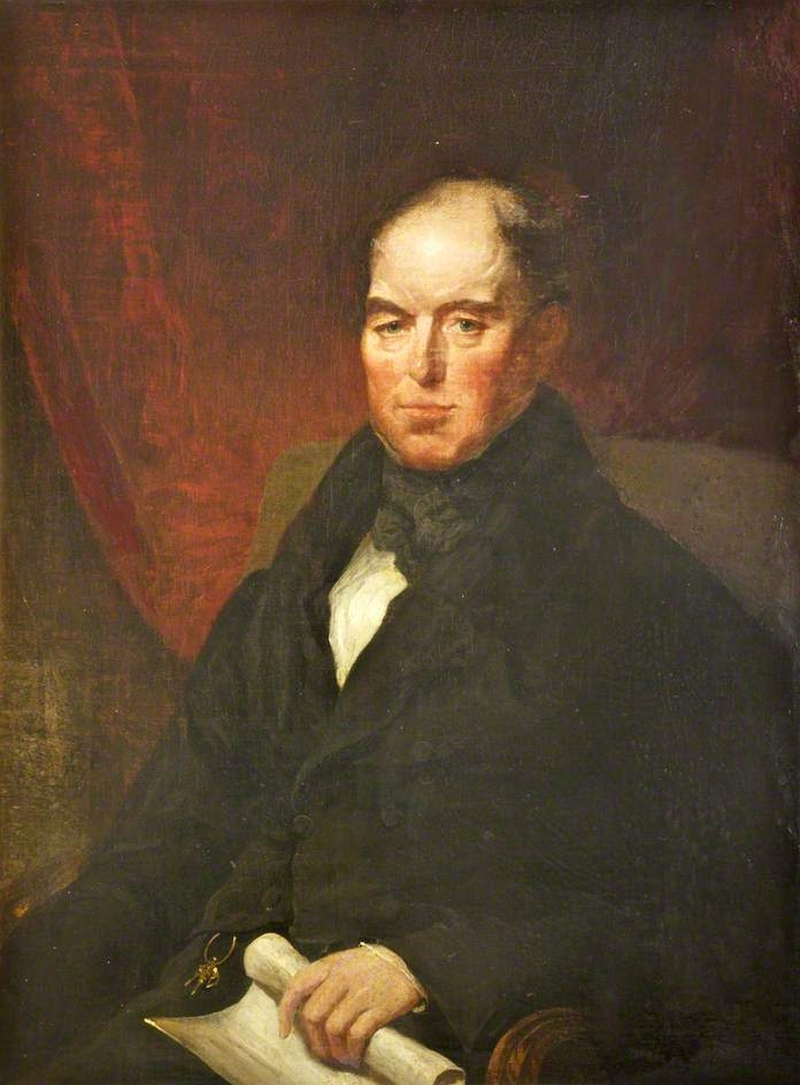
It's 1839 and stout, ruddy-faced Thomas Potter greets Richard Cobden with a shake of the hand at Buile Hill mansion. He wasn’t a man for smiling but he did on this occasion as he genuinely liked his fellow campaigning citizen.
“Richard, how are we going to change the world, today?” he said with a laugh.
“We’re going to rid the country of the onerous and unjustified Corn Laws, Thomas, and that’s just the start,” said Cobden returning the smile.
“So that’s why you’ve conspired to have that worthy Quaker arrive soon from Rochdale,” said Potter.
“Indeed, Mr John Bright will be here,” said Cobden with a nod. “We’ve won the battle for the incorporation of Manchester, dear first mayor, so now we must plan other victories. How’s that old rag you helped start getting on?”
“The Manchester Guardian, it’s not really mine you know, we do have an independent editor.”
I was playing this out in my mind’s eye as a group of media were taken around Buile Hill Mansion recently.
Talk about influencers - real influencers. The ghosts populating the old house on the hill in Salford were of national and international importance. Just this week while pursuing other research I discovered that Irish nationalist Daniel O’Connell had stayed at Buile Hill as guest of Potter.
For a long time these eminences have been haunting a wreck.
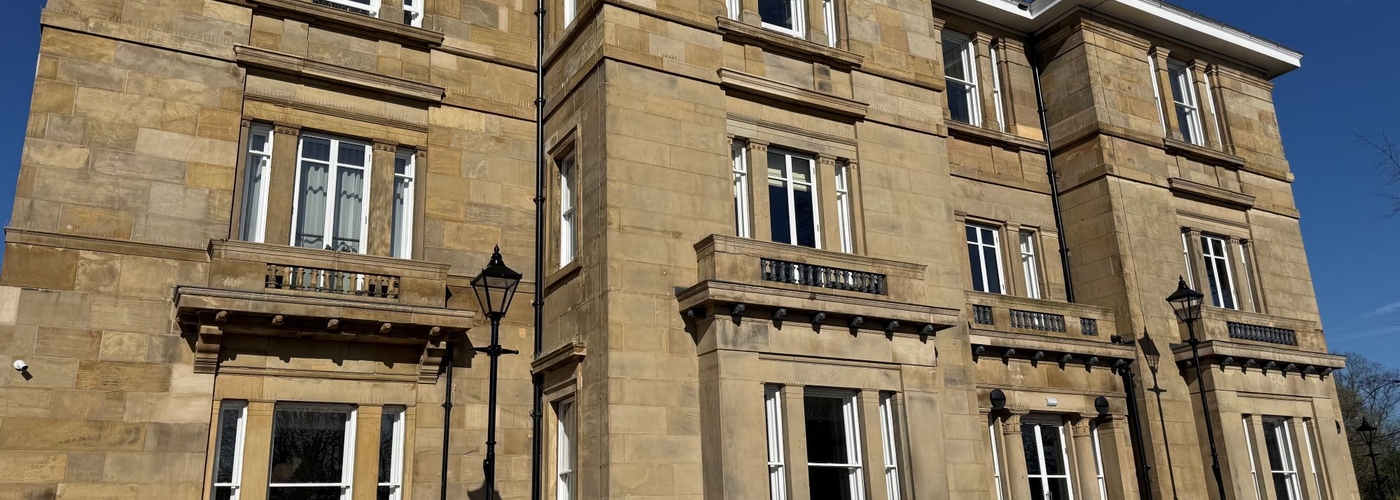
But at last, Buile Hill Mansion, after decades of neglect, will re-open to the public with a future-proofing role in Salford life as the city’s register office. This is Salford’s 100th birthday present to itself as it celebrates city status granted in 1926. Indeed, there’s a Salford coat of arms in porch over the front door.
For Salford’s City Mayor Paul Dennett this is an ambition achieved.
“Bringing Buile Hill Mansion back to life was part of the mayoral manifesto I committed to,” he says. “My proudest part of the process is that so many people were involved. Everyone especially the community groups were part of this. This really isn’t about me as the mayor saying, “We need to do this.” This is about saying, “We need to do this, but we need to do this with everyone who can help.”
This is a little disingenuous as nothing gets done in UK politics without leadership but the fact this is also a collective effort is evident as we are shown around together with a host of interested parties such as The Buile Hill Mansion Association. The reinvention has cost £11m.
The house was built for textile merchant, Guardian sponsor and future Mayor of Manchester Thomas Potter between 1825 and 1827. The architect was Charles Barry, one of the most prolific nineteenth century architects and one of the best. Manchester Art Gallery and the Athenaeum, now part of the Art Gallery are his as is the epic parish church at Stand, Whitefield. Oh and the Palace of Westminster.
Thomas (by then a knight) died in 1845. The family remained in the house until 1877 and then passed through further private ownership to Salford Council and became a public park in 1903.
The mansion was variously a natural history museum and then a coal mining museum until 2000 and when that closed it was allowed to deteriorate and become a disgrace lying heavy on Salford City Council’s heritage conscience. Or maybe not until latterly.
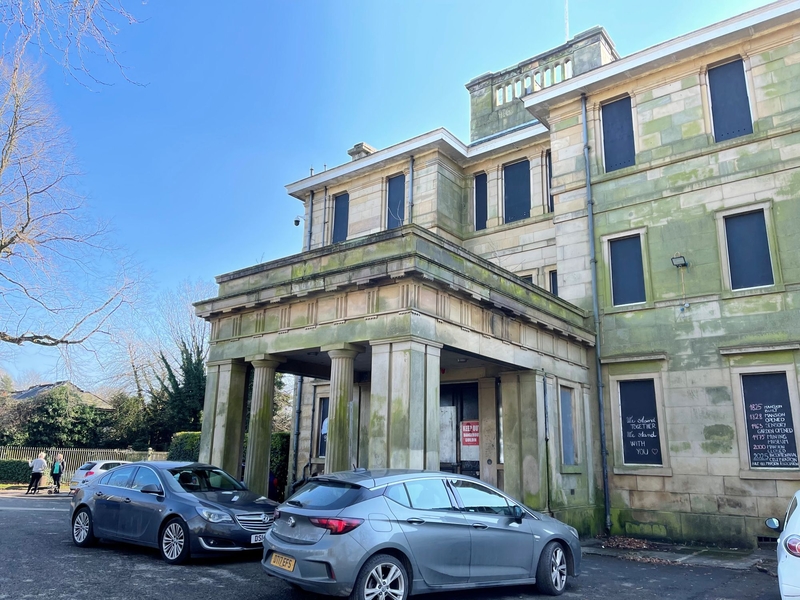
“A lot went wrong with looking after our historic assets,” agrees Dennett. “Places, that were really important to people, disappeared or were neglected. It was a tragedy to see such a grand building as this, which has such amazing history and heritage, in such a poor condition. Buile Hill is Salford’s Central Park, in a sense, if you look at the geography of the city.”
To reinvent and restore the mansion it needed a practical use. The south facing café will open to the public seven days a week. It’s named for Frances Hodgson Burnett, author of The Secret Garden who was born in Manchester and lived briefly in Salford. It’s a thin connection but a sweet one.There will be a community room too.
The principal use for the building is much more profound. It will act as Salford Register Office. This will generate income and thus preserve the asset Buile Hill provides.
“We asked the people of Salford what would be the best use for the building,” says Dennett. “It becoming the Register Office came out time after time as what people wanted to see. Marriages and registering births and deaths are pivotal moments, emotions and feelings are high. To be able to do these things in this building surrounded by the park is fitting and what the people of Salford rightly deserve.”
There are roughly 300 weddings presently through the Register Office at Salford Town Hall in Swinton. Given the pleasant surroundings of Buile Hill, as Dennett points out, this is bound to increase.
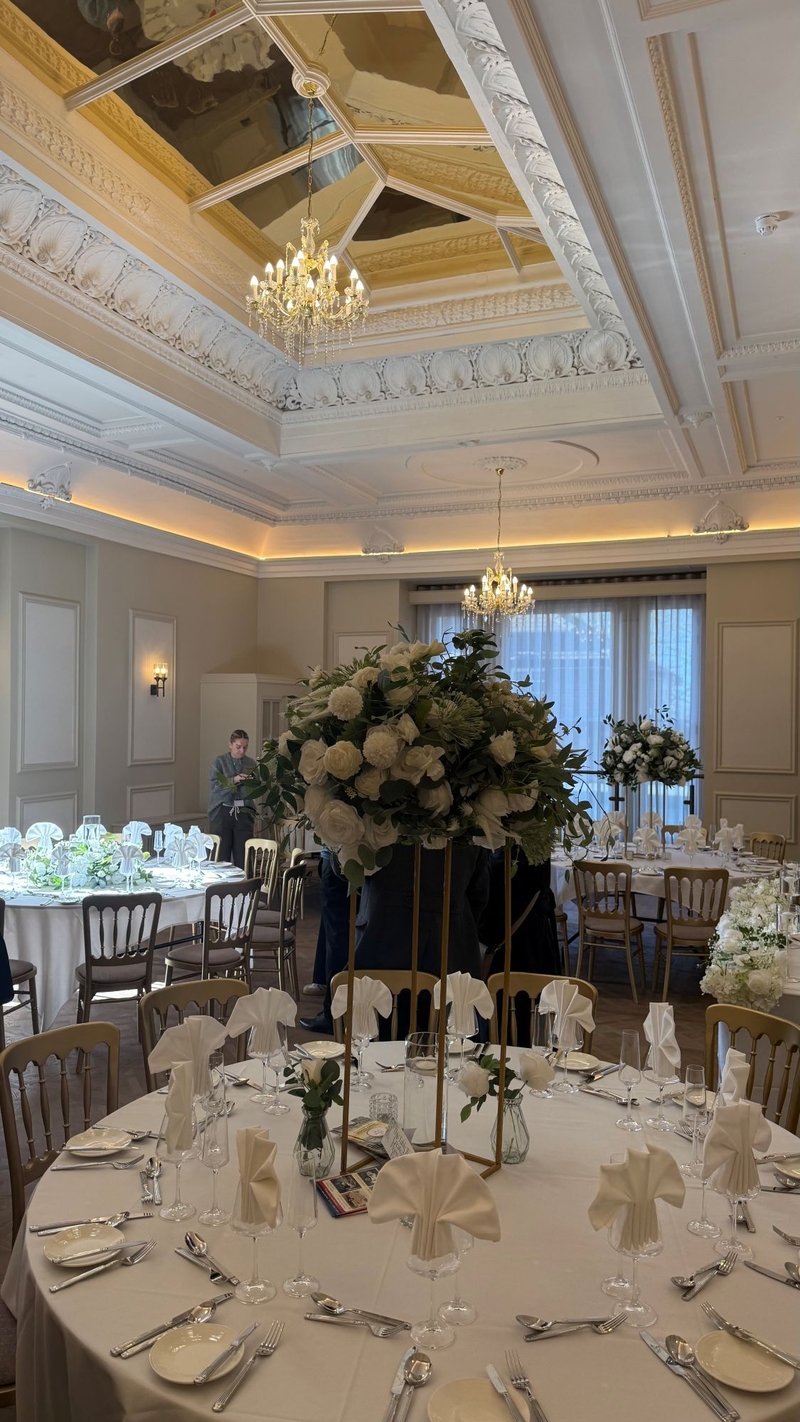
The main function room is attractive with good nineteenth century plasterwork and should be very appealing to those organising a wedding. The capacity is 80 people and there’s a bar on site as well.
The ceremony rooms are handsome rather than stunning and similarly the offices for registering births and deaths.
The most beautiful part of the building is the stairwell that has grace but also packs a visual punch.
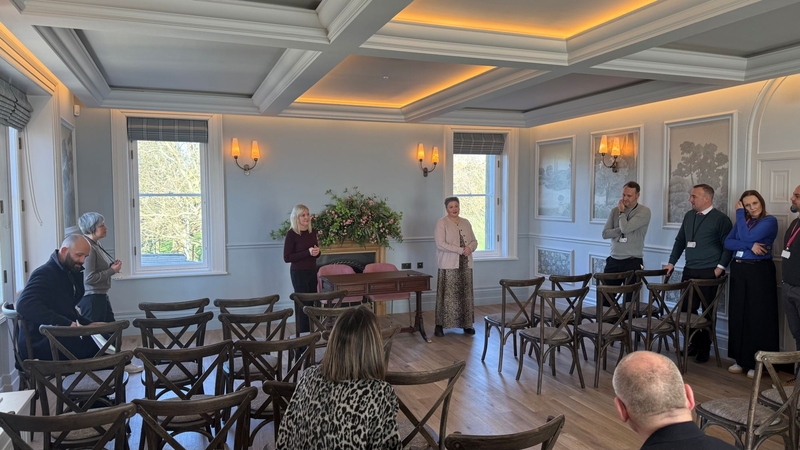
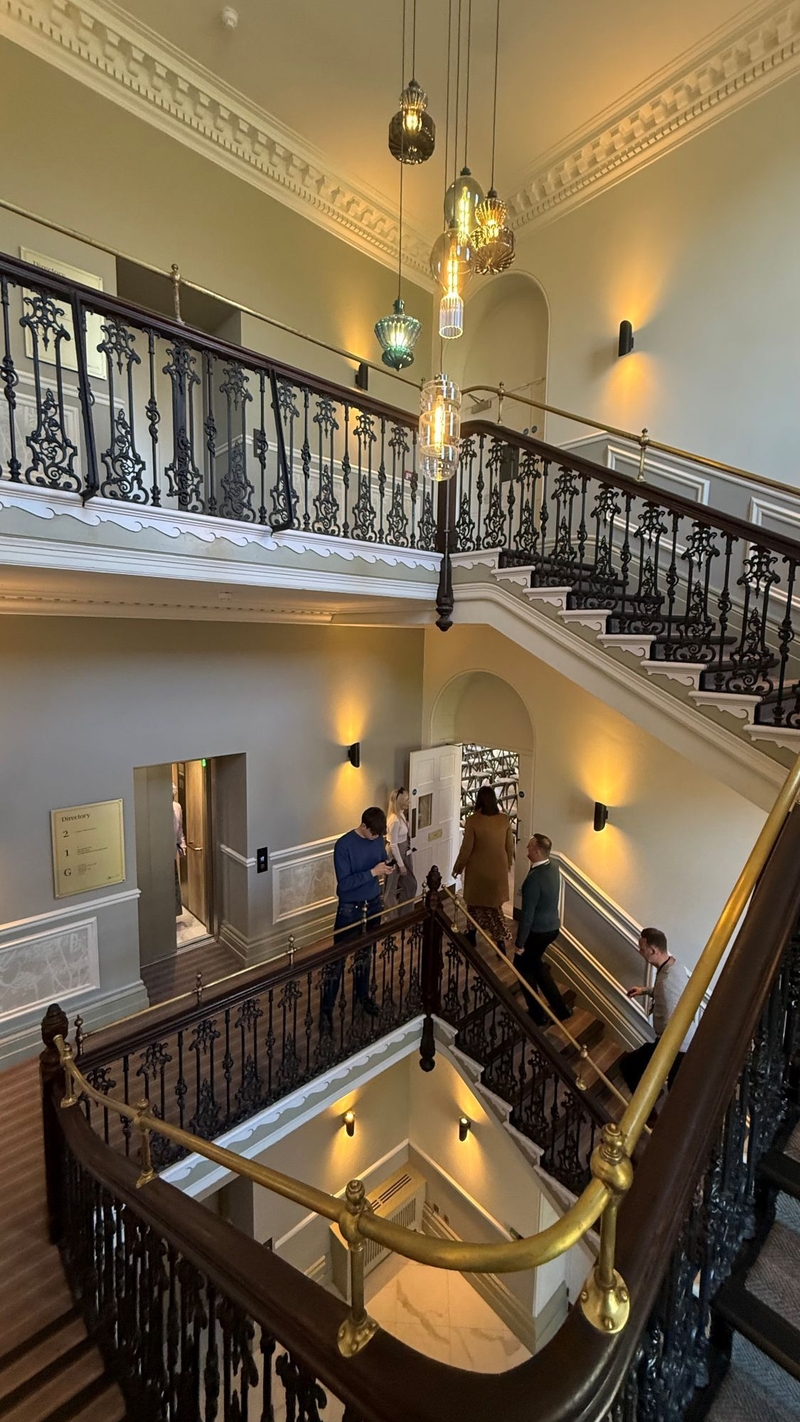
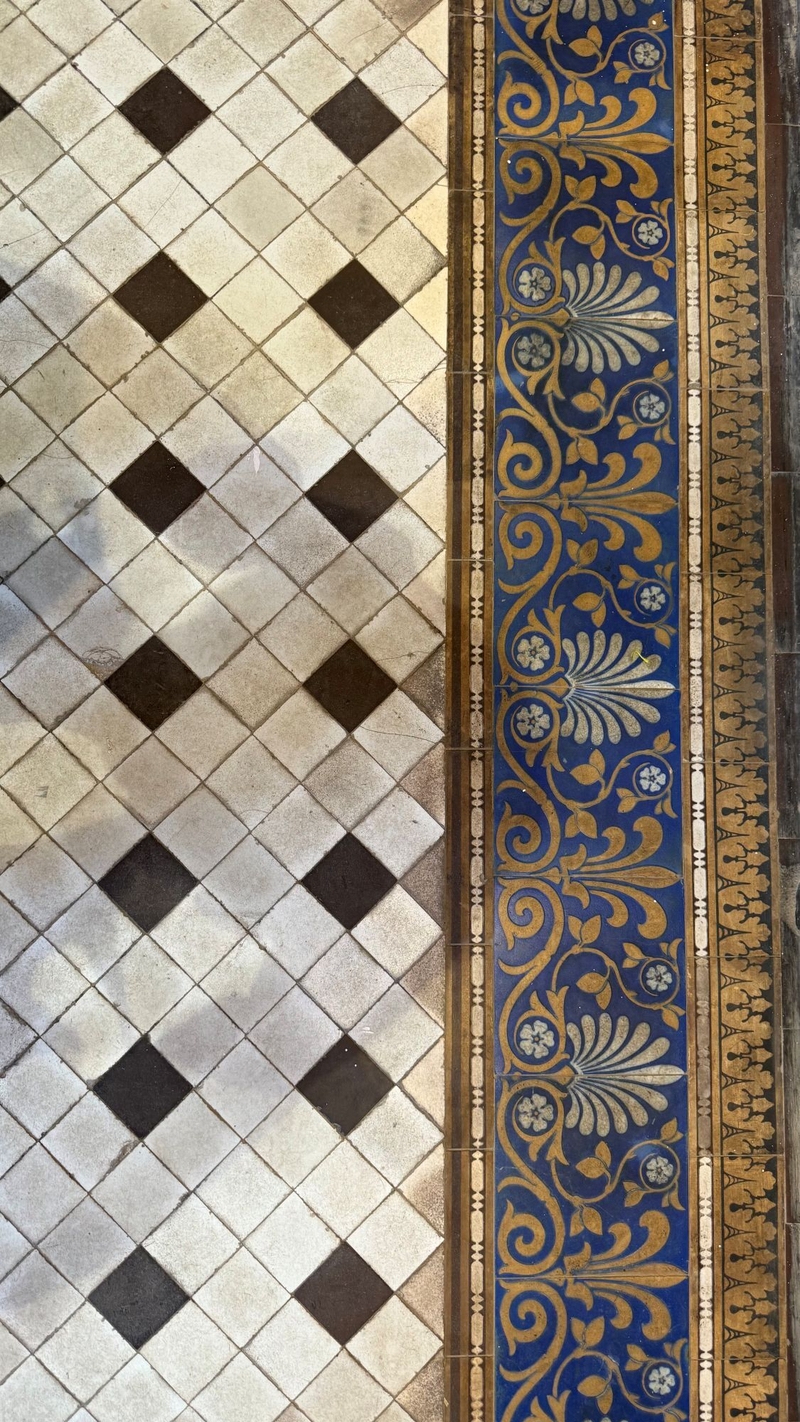
The architectural practice behind the restoration was the excellent Manchester-based Buttress Architects. The interior designs are another fine job by a company called Space Invader led in this instance by Imogen Woodage. It’s sweet how the flower motif (an acroterion technically I believe) is common in the original details from the tiles in the main porch, the newels on the staircase and in the function room.
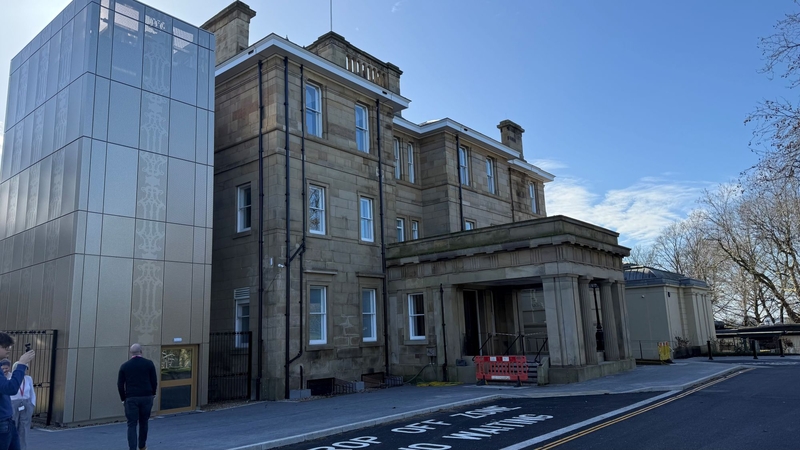
There’s one controversial element that Grant Prescott of Buttress Architects had to solve and it took several efforts. This is the part of the restoration that has raised eyebrows and heckles.
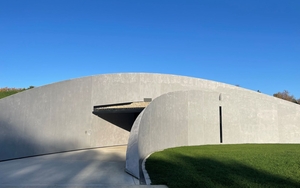
Buile Hill is now a building serving the City of Salford in a very different role so while there is a lift in the main building there has to be an imposition of a stairwell in case of fire on the east side. It’s a statutory requirement.
The chosen design is unashamedly hard-faced albeit with some decoration reflecting the design of the balusters in that glorious stairwell in the mansion. Prescott pointed out it was decided to go with something modern rather than some make-believe fancy that might have looked tacky and aged badly. It’s hard to disagree. Contemporary is usually preferable to ersatz.
There’s more good news that with the house reconstituted further major spending across the park is intended. £348,724 has already come from the National Lottery to undertake surveys of the park, employ a full time park ranger, deliver consultations and events and develop plans and designs. Following this, there’ll be another bid for Lottery cash (around £5m) which will have to be matched to transform the park over five years. Buile Hill should then be as lovely as Peel Park in Salford has become.
The official reopening of the house is on Saturday 21 March. This led to a moment of confusion with Paul Dennett.
“We’ve traced a relative of Thomas Potter. So at the opening it’ll be great to have Beatrice Potter as a guest.”
“Beatrix Potter?” I say, having misheard and wondering if the dead had risen.
“No, Beatrice Potter,” he says with a laugh.
On that coat of arms over the front door at Buile Hill mansion there’s the Salford motto: ‘Salus Populi Suprema Lex’. This translates as ‘The safety of the people is the supreme law’. Sounds about right.
Buile Hill Mansion reopens on Saturday 21 March and from 1pm to 4pm and the public are invited to have a look round the building. The café will open on the following day, seven days a week up to 2pm in winter and 4pm in the brighter months. It will serve breakfast, hot and cold drinks, sandwiches, soups and cakes.
I’m conducting a tour of Chapel Street in Salford on Saturday 25 April at 10.30pm. The details are here.
Buile Hill Park is on Confidential Guides

Get the latest news to your inbox
Get the latest food & drink news and exclusive offers by email by signing up to our mailing list. This is one of the ways that Confidentials remains free to our readers and by signing up you help support our high quality, impartial and knowledgable writers. Thank you!

Join our WhatsApp group
You can also get regular updates on news, exclusives and offers by joining the Manchester Confidential WhatsApp group.