












Jonathan Schofield makes some Manchester observations and hopes to help dispel a myth
The IRA Bomb cliché needs exploding
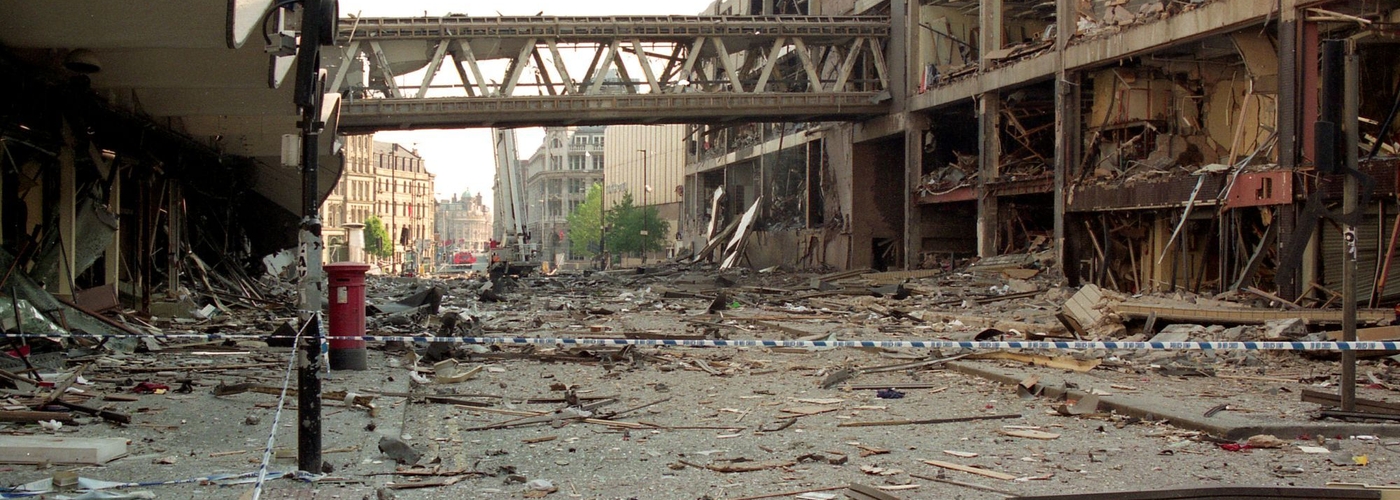
We have an anniversary this week and a myth. It’s become a cliché that on Saturday 15 June 1996 when an IRA bomb exploded at 11.17am a city changed. Manchester went striding, as vigorously as a soldier in a Soviet propaganda poster, into the sunlit uplands of rejuvenation, regeneration, renaissance and every other word prefixed with ‘re’ you can sling a stick at.
This is wrong-headed. The myth of the bomb and its significance for modern Manchester is simply that, a myth. The bomb wasn't the beginning of a resurgent Manchester. It was a moment in the process of the ‘thinking big’ fight back.
The truth is the city had already intellectually changed by the time that big June boom-bang put things back rather than pushed them forward. Olympic bids, the council deciding to work in partnership with commerce rather than against it, the movement back to city centre living, the re-birth of an urban sensibility (this being the key) had already seen the Manchester mood swing upwards.
Of course, the media loves to turn history into a sound bite. In this case the bomb gave the media, and people who like to simplify the complex, their ‘foundation myth’ of modern Manchester.
Yet it’s a peculiarly nasty myth. How can a bomb that creates £700m of damage and injures 212 people ever be a positive? Maybe commentators need to ask those 212 people whether they feel glad to have been part of the event that 'changed Manchester'. It’s also condescending to say Manchester needed the 'leg-up' of a bomb so carelessly and callously placed by evil terrorists to free itself from economic torpor. Before the bomb and subsequently, Manchester has not needed explosives as a leg-up. Nobody ever does.
The longest corner the world has ever known – in a temporal sense
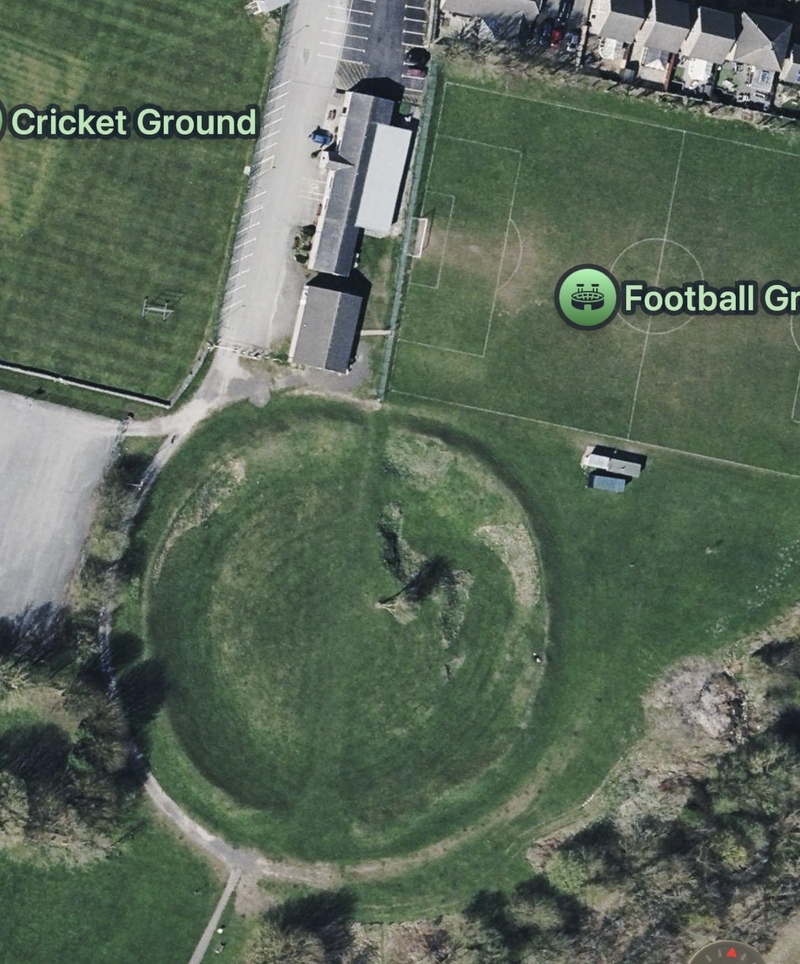
With the World Cup upon us I enjoyed writing about Dove Holes henge monument near Buxton and its unusual location between a cricket ground and a football pitch. The full piece is here but includes this observation: ‘When a player takes a corner he has to run down the slope of the Neolithic earthwork straight through the Celts, the Romans, the Anglo-Saxons, the Normans and so on, passing through the Industrial Revolution and into the 21st century before planting his foot upon the ball and trying to steer it onto the head of a hero from the Hope Valley Amateur League. That must surely be the longest corner run up in history. It’s 4,000 years long. Not far off to the North West is the cricket pitch. If you can connect well you can hit that ball for six and 4,000 years.’
Goosed on the pitch
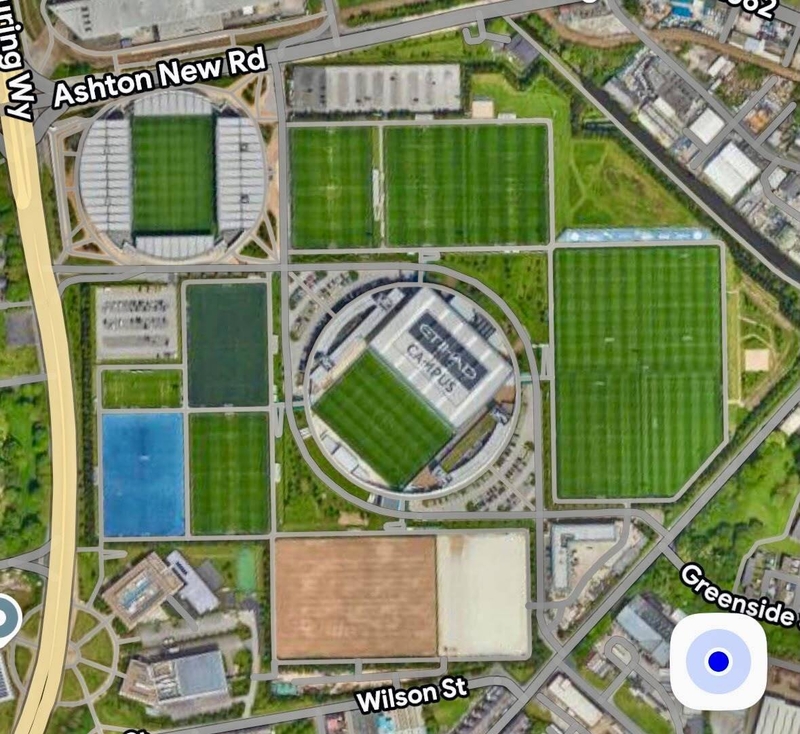
Speaking of football pitches. One of the Manchester guides went on a busman’s holiday recently and went on a tour themselves. This was around the Etihad Campus of Manchester City. They were shown an aerial view of the training grounds as initially laid out. One of the pitches for Connell Coop College, a sixth form college, was given a smart blue artificial surface. Very trendy. The problem was geese thinking it a lake kept crash landing on it.
Swanning about with litter
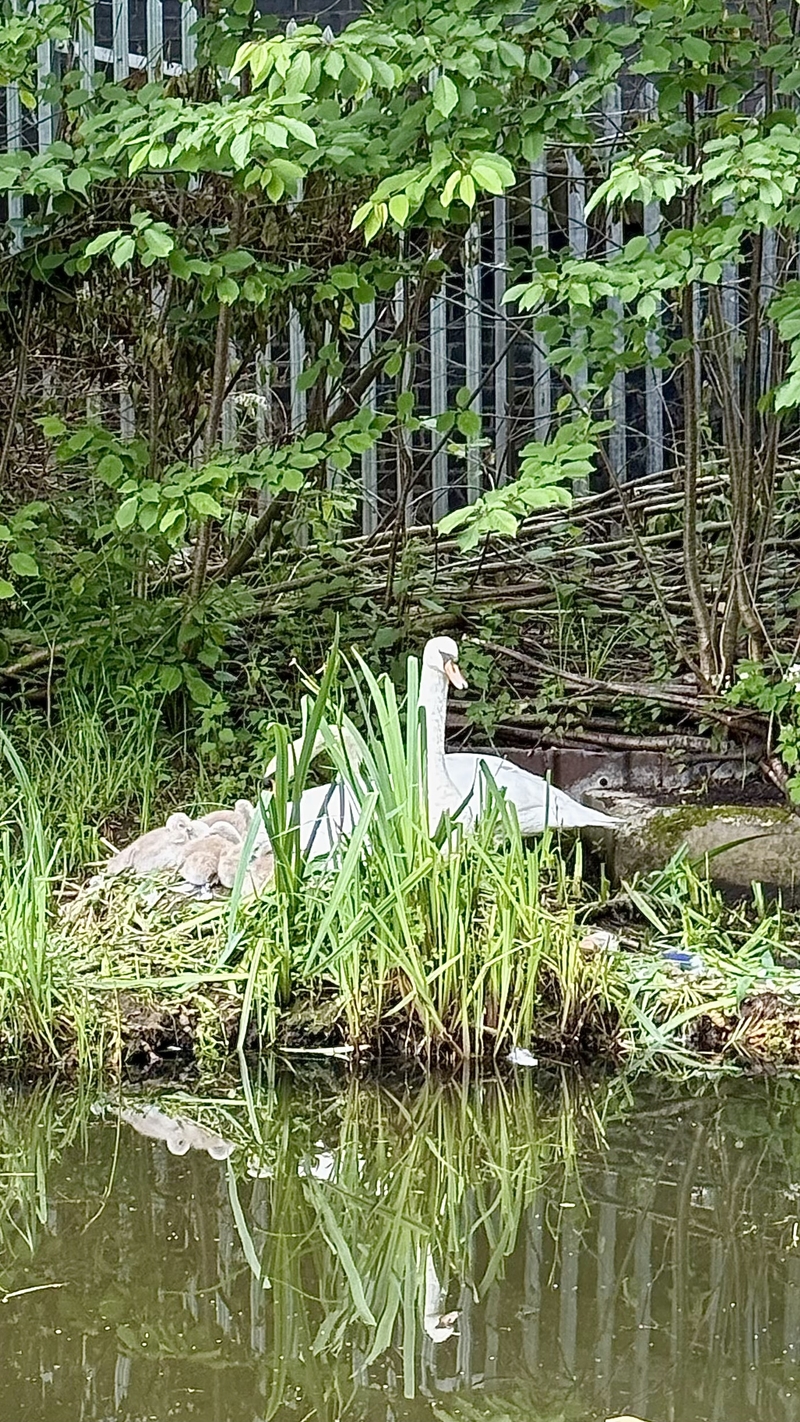
A pleasant surprise is always a joy. More feathered friends news coming up. Cycling down the Ashton Canal on Sunday I came across a pair of swans with their cygnets. Their nest was in an unpromising position in the deep urban wastelands of East Manchester. There are huge plans for the area, Holt Town, in which a mix of housing and landscaping will lift the area from dereliction. The idea is to link Manchester City’s ground and Coop Live with existing redevelopment at New Islington. It’ll take ten years and may include a lido.
Those big plans were no concern of this happy family. The nest was on the far side of the canal in reeds but no more than five metres away, if that. As we watched there was a unnatural sounding crack. One of the adult swans, the one furthest away, was removing with its beak a plastic cup from close to the nest. It adroitly tossed the offending cup a good distance away. If the swan could have sighed it looked like it would have.
The mess humans make is astonishing especially when areas become derelict. Meanwhile a ten second walk down the canal brings one to what should be (and will be if the plans work out) a fine engineering of conjunction of river spanned by a canal aqueduct which is in turn spanned by a railway.
The far bank of the canal under the railway there was another kind of nest. A homeless man sat on a surprisingly well-upholstered chair next to his tent among scattered grubby blankets. He had his back to the passing joggers, cyclists, fisher folk, swans and geese. He seemed lost in contemplation.
Model situations on Oxford Road
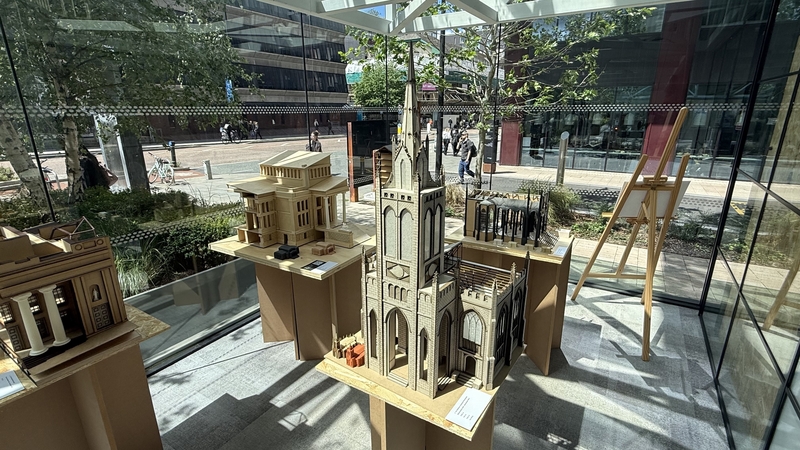
Architectural models. I love ‘em. There are presently some very fine ones on display in the Manchester School of Architecture until Friday. These are cutaway models of 19th century buildings from Manchester and Berlin. They make up an exhibition curated by Eamonn Canniffe about German architect Karl Friedrich Schinkel's visit to Manchester in 1826. Most of the buildings in the exhibition are still with us such as Murrays Mills. The one that’s gone is St Matthew's Church in Castlefield (see pictures below), which was needlessly and recklessly demolished in the 1950s. Its replacement is a particularly unattractive office block.
Schinkel was one of the greatest of the early 19th-century architects responsible for classical masterpieces such as the Altes Museum on Museum Island in Berlin. He came to Britain with his friend Peter Beuth on a "a discreet spying trip" at the request of the Prussian King. Beuth was interested in the industrial processes which is probably why they visited Ancoats. Schinkel wrote ‘Here are buildings seven to eight storeys, as high and as big as the Royal Palace in Berlin’. I recommend a brief visit to the exhibition where you can also take a look at proposals from students at the School of Architecture students for the former Chorlton Police Station. They are very creative
Or you can take a model tour – Thursday 18 June, 1pm
If anybody's around, I want to conduct an hour tour next Thursday, starting at the Kimpton Clocktower Hotel from 1pm and taking the short walk down to the School of Architecture taking in some of the history and buildings in the area. We’ll have a look at the exhibition and I’ll describe the models on display. The price will be £10 per person, and you can book here or pay on the day if you find you have time.
Batman moves to Manchester
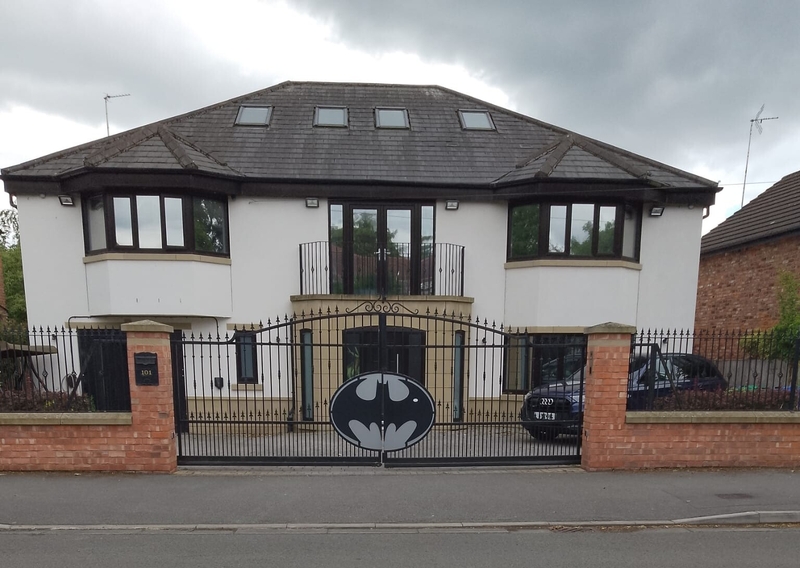
In the closing scenes of The Dark Knight Rises Batman and Catwoman can be seen in civvies enjoying a lovely cocktail in a swish bar in Florence. It seems he’s now moved to South Manchester. Probably wanted a quieter life but as that gate hints, it seems he can’t quite let go.
Upcoming tours
Saturday 20 June 10.30am EXCLUSIVE: Salford Lads Club Tour (plus Middlewood Locks and Manchester, Bolton and Bury Canal) The finest and last lads' club in the country with stunning interiors and moving stories.
The Saturday Walkabout Series The Manchester Music Walkabout 1pm every Saturday; The Manchester Pub Walkabout 3pm every Saturday. Total entertainment, brilliant stories, great fun.
Wednesday 24 June 6pm EXCLUSIVE: Jewels in the Crown - the Oxford Road tour Interior visits to superb buildings old and so brand new the polish still shows through. Some of these places will make your jaw drop. There are wonderful stories of truly world-changing importance.
Saturday 27 June The Saturday Walkabout Series The Manchester Music Walkabout 1pm every Saturday; The Manchester Pub Walkabout 3pm every Saturday. Total entertainment, brilliant stories, great fun.
5.30pm The Manchester ghost tour Superb spooky stories visiting the locations inhabited by the dead with stories of the gruesome pigman, the drowned beauty who floated back, the opera singer who returned from the other side, the Manchester magician and more.
1.30pm & 3pm Exclusive: Ruined St Luke’s Church, Cheetham Hill, a very special tour for 2026 Imagine this as a tour. A ruined church, an overgrown graveyard, a gloomy crypt. There will be music and projections. This will be special, this will be spectacular. In association with the North West Heritage Trust.
July Saturday 4 July NEW 10am Secrets of the Northern Quarter and Piccadilly There's art, sculpture, grand buildings and humble buildings and a lively street scene. This tour reveals the Northern Quarter and Piccadilly with all the good, the bad and the ugly.
Sunday 5 July NEW 11am Secrets of Old Trafford, a most significant suburb Of course we'll mention the incredible sporting institutions here but there is so much more to talk about from radical politics to art shows that changed the way people looked at art plus the greatest loss of greenery in the city's history.
Vouchers are available and can be personalised. You can book the vouchers here.
Get the latest news to your inbox
Get the latest food & drink news and exclusive offers by email by signing up to our mailing list. This is one of the ways that Confidentials remains free to our readers and by signing up you help support our high quality, impartial and knowledgable writers. Thank you!

Join our WhatsApp group
You can also get regular updates on news, exclusives and offers by joining the Manchester Confidential WhatsApp group.