












Neil Sowerby enjoys the viaduct vistas of a great Swiss rail journey
THE Rhaetian Railway really has it all. The trains of this jewel in the Swiss network offer you a dizzying front row seat for landscapes that define Ruggedly Romantic. These alone are worthy of its World Heritage Status but it is the staggering engineering feats in its construction that have given it the UNESCO nod.
This stretch is totally ‘loopy’… after the steady climb up the journey becomes a thrilling rollercoaster ride down
RiB’s flagship journeys are on the globally famous Glacier and Bernina Expresses, yet there are more modest pleasures to be had along the tracks. Take my tiny ‘tschutschutrain’ from Filisur Station – the ambitiously titled Landwasser Express. This motor transport isn’t, understandably, covered by my Swiss Travel Pass – passport to some epic nationwide train travel – but it is worth the 15 Swiss franc return fare.

Its destination is the vertiginous Landwasser Viaduct, spanning the river of that name between Schmitten and Filisur. This is the mightiest of all the 196 bridges along the 122km Albula/Bernina route. Built at the start of the 20th century from the local dark limestone, it is 65m high, 136m long. Riding along its curving single track, the view flashes past as your train hurtles immediately into a tunnel.


The only way to gauge its spectacular scale is from below. Hence our 15 minute trundle down past the Alpine garden centre along rutted roads to a clearing with a bar and picnic tables. I grabbed a malty Brandlöscher beer while my fellow passengers neck-crickingly trained cameras and mobiles on the arches above. The canny rail buffs were probably co-ordinating timetables to capture a Bernina or Glacier. I was content, eventually, with a locomotive called Watson. Apparently this local service was advertising a Swiss media outlet.
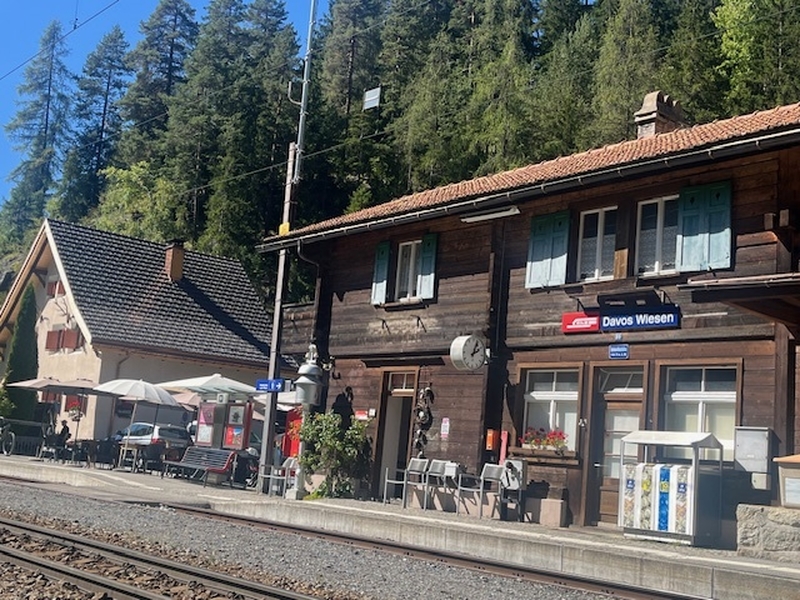
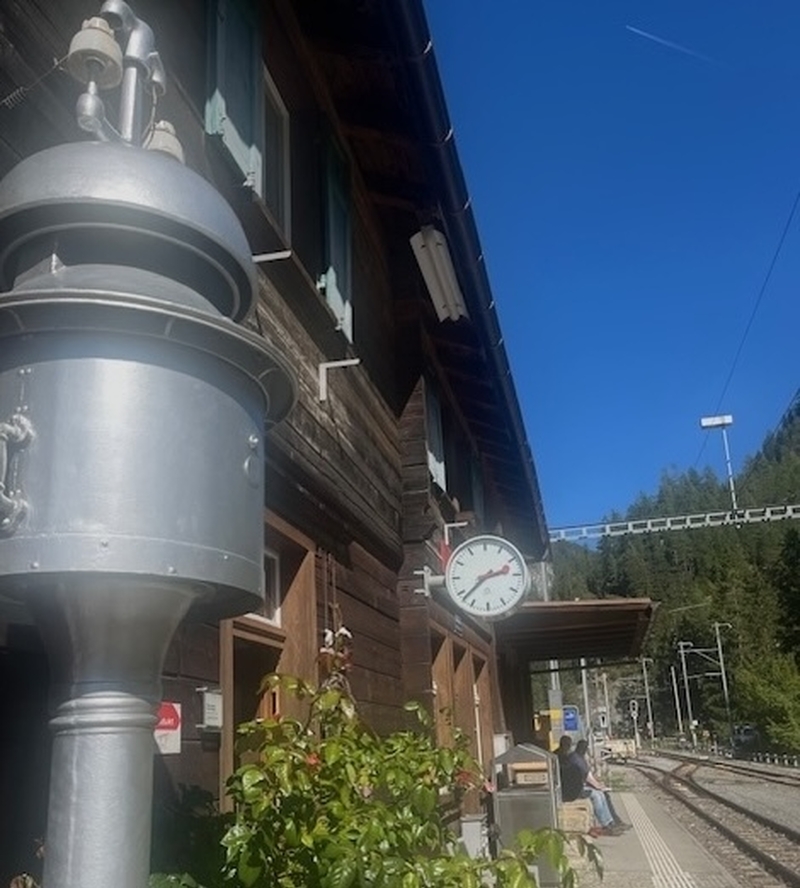
One viaduct in an afternoon is never enough, so it was on to Davos Wiesen further along the line to Davos. Wiesen means meadow and it really is an old school timber-clad, rural halt, a request stop. A large bell rings when a train is imminent and there is a stop buzzer to push.
The Wiesen Viaduct is actually taller and longer than the Landwasser but less spectacular. You reach a viewpoint by a path parallel to the rails. Marianne at the station’s cake and beer kiosk tended my bulky case while I trekked into the gorge. She didn’t take cards and I had no cash, so she subbed me a couple of beers on a promise of repayment at her deli in Davos, where I would be staying later.


An idyllic hour and two large wheat beers later further evidence of the Swiss devotion to railway heritage rattled in. A cult locomotive called Bobo 1 was pulling a historical train with vintage cars and open scenic carriages (extra thrills in gorges and tunnels guaranteed). Between May and October it runs twice daily each way between Filisur and upmarket ski-centre Davos Platz. Normal fares apply.

Davos and a pilgrimage up the Magic Mountain
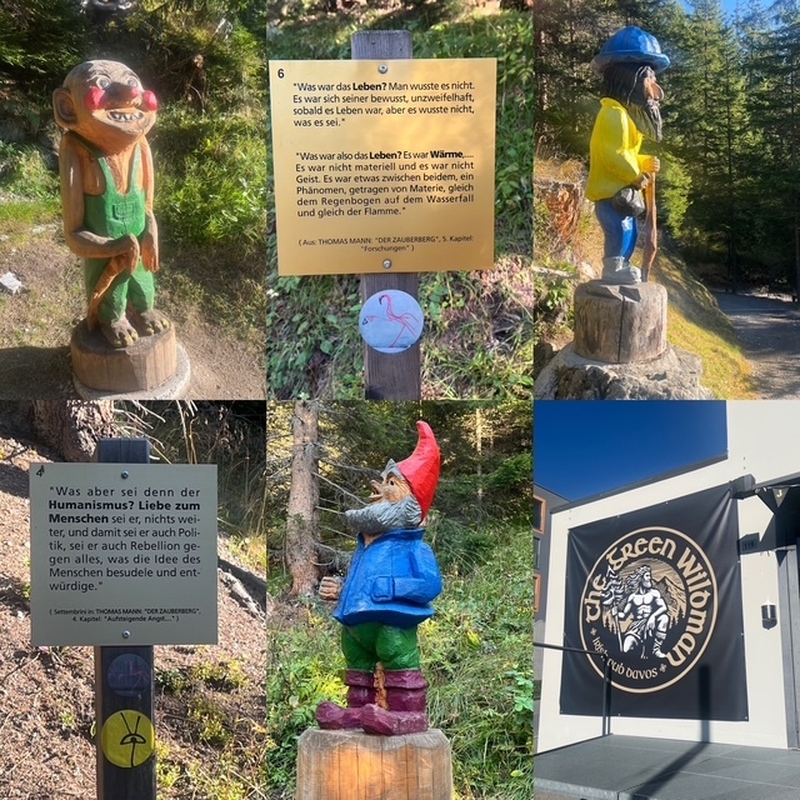
Yes, next morning in Davos Dorf I settled the beer bill over a coffee and poppy seed cake… after a literary pilgrimage. Perhaps you’ve never read the novels of Thomas Mann, but I’m sure you’d love the footpath named after him. The German Nobel Prizewinner’s relationship with the resort began in 1912 when his wife Katja was treated for tuberculosis at a forest sanatorium there. Out of his experiences visiting her sprang his greatest work, Der Zauberberg (the Magic Mountain, 1924). The former sanatorium is nowadays the Waldhotel, surrounded more by condominiums than trees. Ask at the hotel front desk and they’ll show you a patient’s bedroom preserved as it was a century ago.


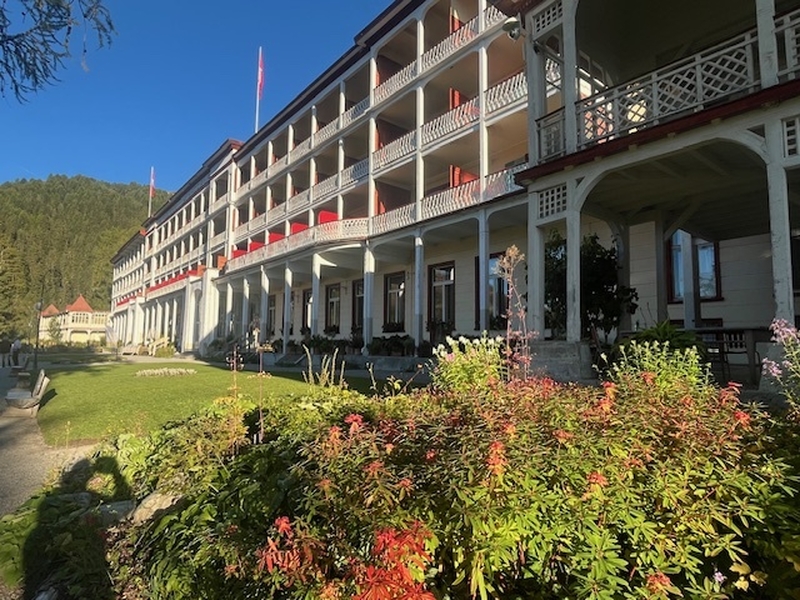
More exciting is a visit to the more glamorous Art Nouveau hotel that inspired the novel’s setting. I took the easy way up to the Schatzalp in four minutes via the funicular. At 1880m above sea level, the mountain air that hits you was the health-giving selling point for this grand pile with its lush botanic gardens. No modern extensions, it is a sleeping beauty of a place.
Both hotels closed their sanatorium facilities in the late fifties, by which time Mann was dead. 2025 is the 150th anniversary of his birth. What would he have made of the Thomas Mann Weg? This trail that took me back down to the Waldhotel bizarrely features plaques with erudite Mann quotes along with carvings of woodland demons that are more Brothers Grimm.
Altitude certainly stimulates the appetite and my central hotel, the four-star Morosani Schweizerhof, provided a terrific gourmet dinner plus a packed lunch for the next leg of my rail journey.


All on board the Bernina Express
Once again trains on time, smooth connections. Swiss Railways, 99 times out of 100, totally spoil you. Which is why a major delay to my showcase journey had come as such a shock. A couple of extra hours in St Moritz was no hardship, but there was the fear that impending dusk might lessen photo opportunities during the Bernina Express’s descent to Tirano in Italy. The gigantic, brooding Morteratsch Glacier was catching the last rays, but the Lago Bianco (so-called because silt in the glacial meltwater colours the lake white) was distinctly shadowy grey as we tackled Europe’s highest railway Alpine pass, the 2253m Bernina. This stretch is totally ‘loopy’. After the steady climb up the journey becomes a thrilling rollercoaster ride down.
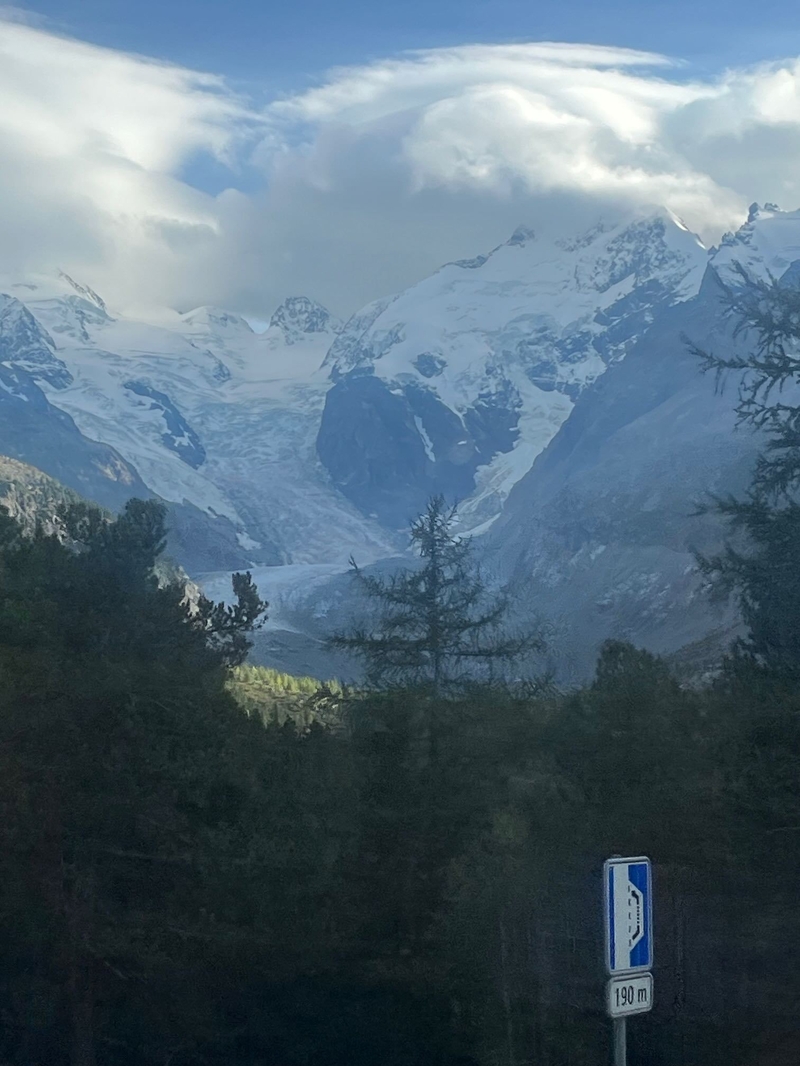


Since this was always planned as a scenic tourist railway the train had to go through as few tunnels as possible. The engineers’ solution was a series of switchback viaducts culminating in the Brusio Spiral between Poschiavo and Tirano. This 143m circular construction was built in 1908 to limit the railway's grade to the required maximum of seven per cent and stop the engine going too fast on the way down or slipping on the way up. There’s a marvellous view of the bright red train snaking around earning it the affectionate nickname ‘Der Kleine Rote (The Little Red One).


Nebbiolo red wine and buckwheat pasta in pretty Poschiavo
The Poschiavo Valley, with its lovely lake is still in Switzerland but feels decidedly Italian. I spent my final rail-tripping night in Poschiavo town itself, just 16km from the border. A place dominated by impressive churches and the sound of a fierce Alpine river. My lodgings in a monastery building hotel annexe suggested it might prove an ascetic finale. Should I stay in my room and peruse the New Testament in Italian or explore the town?
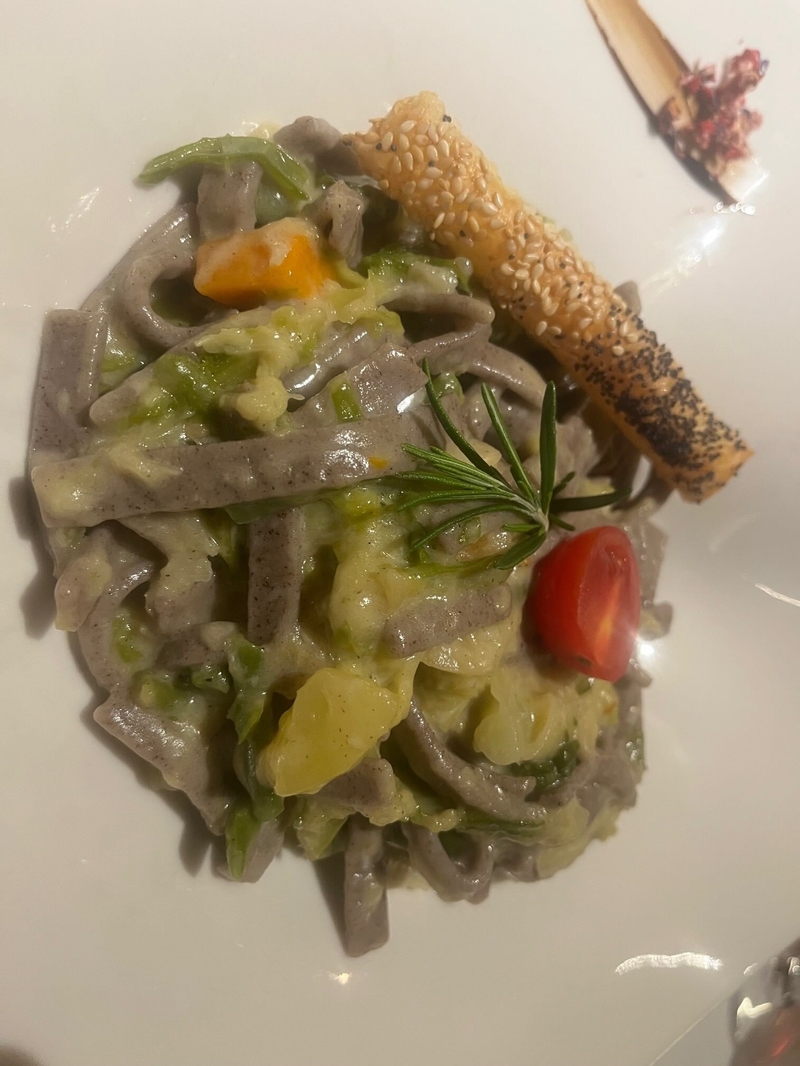

Glad I did the latter. The cafes were lively early evening and my dinner at the Albergo Croce Bianco proper was jolly and beyond ample. Bresaola to start followed by a local speciality – a pasta made from buckwheat and wheat flour, served with potatoes and cabbage. At the Albergo it is strewn with mortadella too.
It is called Pizzoccheri and needed to be washed down with a border-straddling house Valtellina red. Made with Nebbiolo, the grape of Barolo in Piemonte, it weighed in at 14.5 per cent. Yes, after this I was too sleepy to start at the Gospel of Matthew back in my cell. I knew I wouldn’t have to pray for the train to be on time next day.
Fact file
Neil Sowerby flew with SWISS (Swiss International Air Lines) from Manchester Terminal 2 to Zürich; the rail shuttle into the city takes just 15 minutes. From the Hauptbahnhof (main station) it takes just over three hours by train, with one change, to St Moritz – starting point for the Bernina Express.
Every journey during his stay was covered by a Swiss Travel Pass. This entitles you to unlimited travel in Switzerland by train, bus or boat. The Swiss Travel Pass is available for 3, 4, 6, 8 or 15 consecutive days. As a sample a three day pass 2nd class is currently £229, 1st class £364. Travel 1st Class and experience even more of Switzerland: until March 31 2026, receive an extra day's travel for free, when you purchase a 4-day Swiss Travel Pass, or an extra two days' when you purchase an 8-day Swiss Travel Pass.
For the year-round Bernina Express, running Chur-St Moritz-St Moritz you have to reserve seats. The journey is free with the Swiss Travel Pass but you must pay a mandatory reservation fee. If you don’t fancy a return rail journey at the Tirano terminus you can catch a dedicated Bernina Express bus that drives you another three hours back to Swiss soil in Lugano.
On this trip Neil was a guest of the Albergo Croce Bianco, Via da Mezz 97, CH-7742 Poschiavo, staying in their separate Monasterio annexe. In Davos Platz he stayed at the four star superior Morosani Schweizerhof, Promenade 50, 7270 Davos.
For Switzerland tourism information visit this site.