











Neil Sowerby heads Southside and revels in some diverse discoveries
WEST is best has usually been my mantra on gastronomic jaunts to Glasgow. Often I don’t even make the West End; there is so much to distract in hip Finnieston. Usually involving small plates, game and seafood. Maybe the city’s focus is swinging elsewhere, though. After 12 years Argyle Street pioneer The Gannet, once an AA restaurant of the year, is closing for good on New Year’s Eve, while arch-rival Ox and Finch shut for a while in the spring for a refurb after spawning a city centre offshoot, Margo (of which more later).
The deep-fried Mars Bar has been an artery-hardening, Scottish culinary car crash since the mid-nineties… I made my excuses and left

This is hardly a sea change. Just a reminder that in a city as vital as modern Glasgow it might pay to be more adventurous. Time to seek out indie gems that have gone under the radar. Definitely crossing the Clyde to explore the revelation that is Southside. But our first port of call was just off the Saltmarket, which leads down to the river from Glasgow Cross and the Tolbooth Steeple, hub of the ancient royal burgh (on a site called by the Gaels Glaschu: ‘Green Hollow’).


A Wake Up Call Martini at Daddy Marmalades
Parnie Street is a surprising indie enclave, home to this dark and intimate bar named after the co-founders’ pet dog. Dubliner Kim Toft and Scotland’s 2024 Mixologist of the Year Mari Chierchia have piloted it to No.17 in the UK’s Top 50 Cocktail Bars. The hugely creative drinks list is obvious testimony. For starters, dip your toe (not literally) in their specialist Martini list. Recommended: The Wake Up Call (£13), which combines Arbikie Haar Wheat Vodka from Scotland’s Lunan Bay with Noilly Prat, Lillet Blanc, Rocket and Pickled Asparagus. As with all potent Martinis, just the two. If cocktail cravings really grab you check out an old fave of mine and another Top 50 inclusion, The Gate, opposite the legendary Barrowlands Ballroom.

Half a Creedy Carver Duck at Margo
The Martinis were an aperitif before Margo, a 10 minute walk away in the Merchant City, which has its own affordable cocktail-led bar SEBBS in the basement. Miller Street has a wealth of places to eat, including the much-loved Paesano Pizza, but Margo is on a different level. Two levels actually in this one-time warehouse.now given a breezy 70s loft look. It’s big – 138 covers – but beautiful. Ask for a table on the mezzanine with view over the bar and open kitchen.
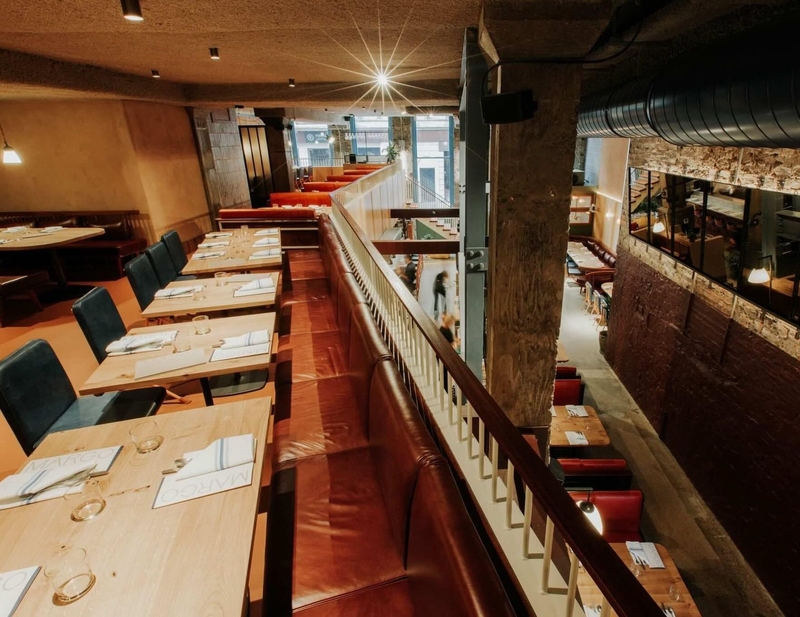
Is the food better than at Ox and Finch and Asian-influenced stablemate Ka Pao? Michelin, who awarded it a Bib Gourmand almost instantly, obviously lean that way, praising its “satisfying synthesis of Mediterranean cooking and Scottish produce”.
Small plates is the continuity, but that hardly applied to what was essentially our sharing main. For £42.50 you get half of an extremely sturdy Creedy Carver duck. From it you get a fan of breast slices, a tangle of crispy leg meat, a silky liver parfait… plus on a separate plate a rich dark marmalade on toast. Glorious stuff from chef Robin Aitken.
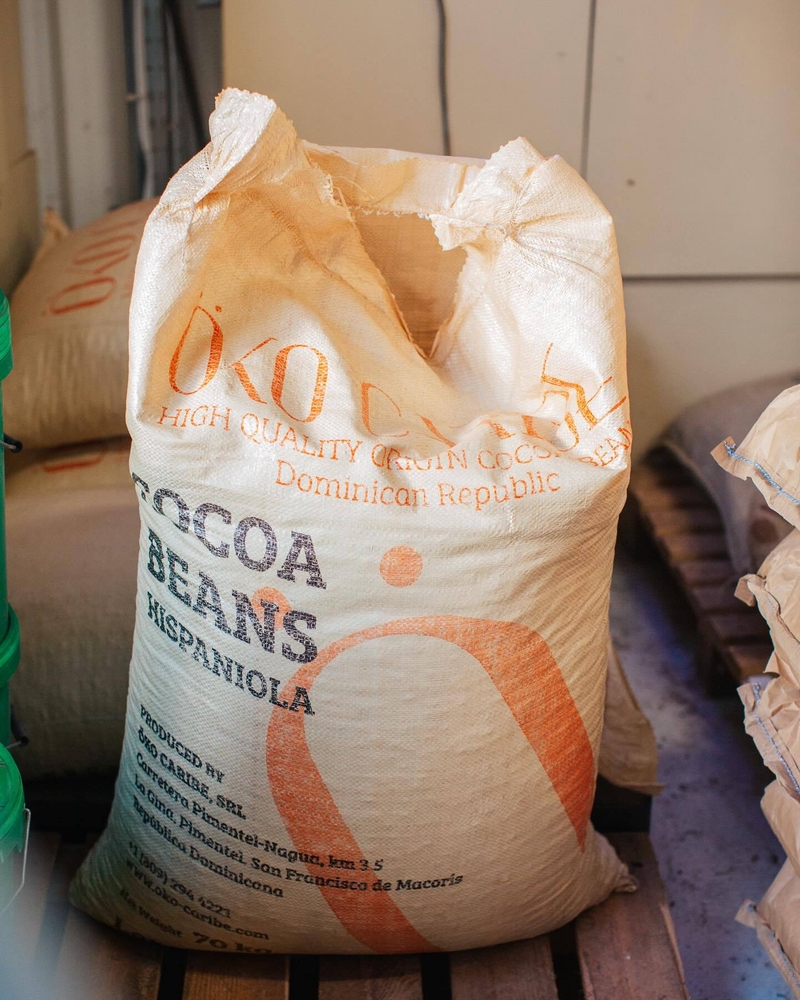
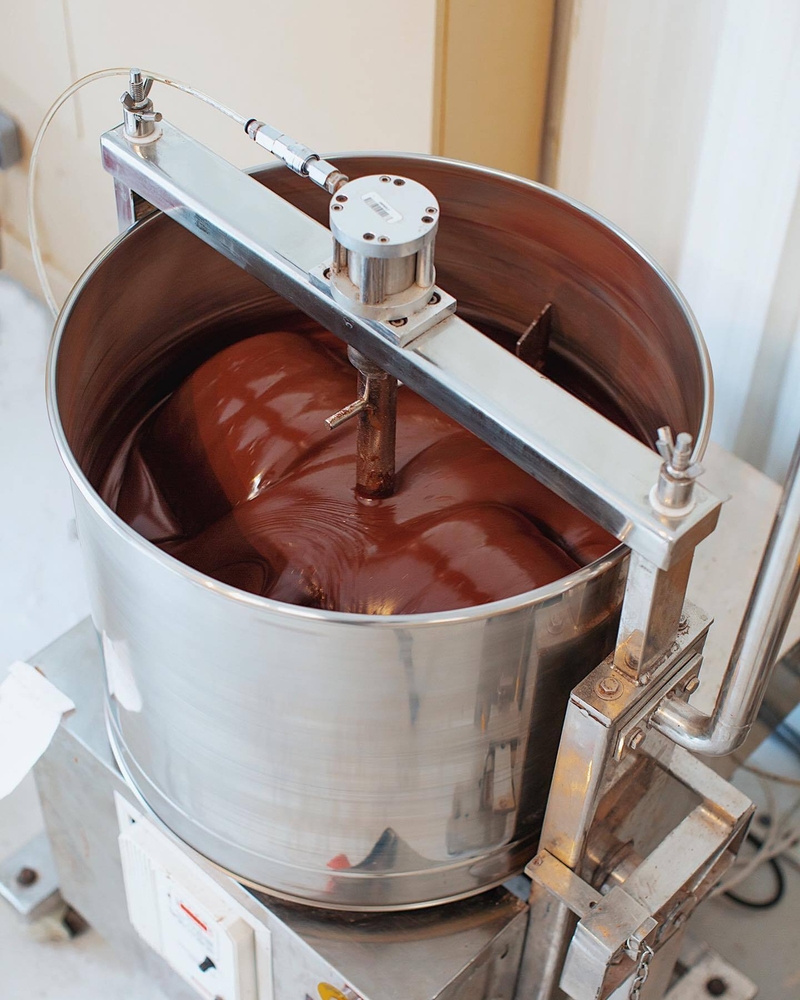

Philippines 70 per cent bar at Bare Bones Chocolate
Amazingly there was still space for pudding at Margo and the Bare Bones chocolate nemesis with vanilla ice cream didn’t disappoint. What with the Bare Bones bit? Turns out it’s the name of a local chocolate maker, one of the few in the UK that are ‘bean to bar’: ie handcrafting the chocolate from cacao bean through to the finished product. Their colourful bijou boutique in King Street is thus a must for chocolate lovers. One favourite from my random tasting? It has to be the 70 per cent organic dark chocolate sourced from a Filipino cooperative, which costs £7.50 for a 70g bar.
Observer choccie columnist Annalisa Barberi lauded it as the best dark chocolate she had ever sampled. Fans detect ‘pecan notes’. Like the rest of the range all packaging is sustainable; even the inside wrappers are made from plants and can be re-composted after use. How different in every way from that commercial staple, the Mars Bar.
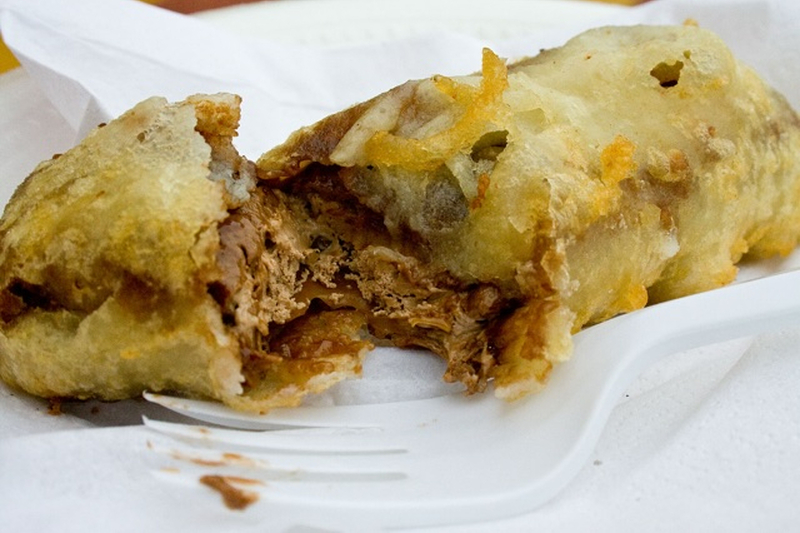

Deep-fried Mars Bars at The Blue Lagoon… or chippie tea at The Drygate Tap?
Still, over 200 million Mars bars are sold annually in the UK and Ireland alone. I’m not sure how many of these nougat and caramel filled milk chocolate treats end up in the deep-fat frier. The deep-fried mars bar has been an artery-hardening, Scottish culinary car crash since the mid-nineties when a chippie owner in Stonehaven first battered one.
In Glasgow this time I was finally tempted when I saw them available across the Blue Lagoon chippie chain with several city centre outlets. Did the picture on the wall really capture the sugary, fatty allure of 1,000 calories? Did social media approval sway me to to order one for £4.50 (with ice cream a quid extra)? I made my excuses and left.
None of this detracts from the excellent fish and chips served up by Lagoon owners the Varese family, this year celebrating their 50th anniversary. Alas, I’d already had my haddock and fries fix at the Drygate Bar, Kitchen and Brewing Co. OK, £18.95 is way over chippie prices, but their own Kelvin pilsener had helped create a delicate tempura-like batter for the flaky haddock, the chips were beef dripping plus, big plus, there was freshly-poured IPA to wash it down. Plus the 120-cover space with a terrace and close-ups of the brewing vessels is a cool spot.
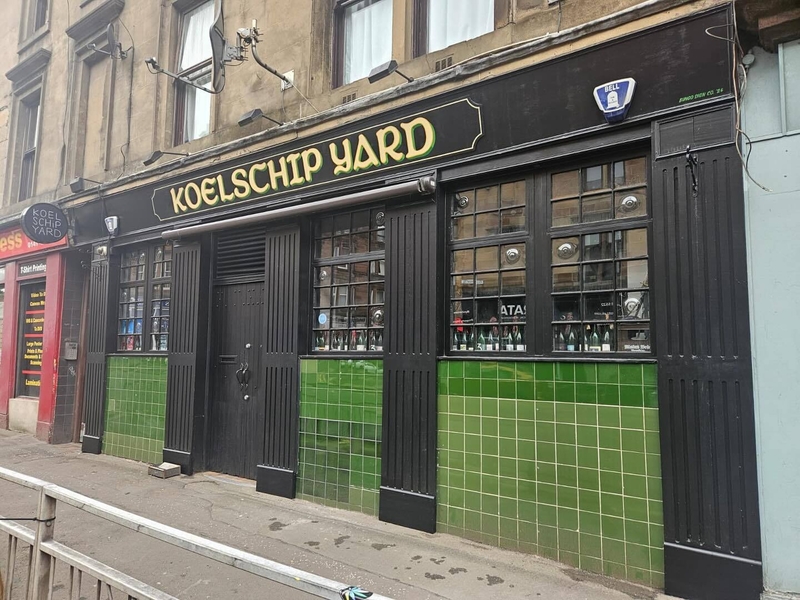
Craft beer at Koelschip Yard… or In Pursuit of Hoppyness
Drygate, of course, is the ‘microbrewery’ project, in a former box factory, of next door’s iconic Tennents Lager Brewery (in partnership with Williams of Alloa). As elsewhere, Glasgow beer bars come in many forms from traditional pubs to the quirkiest of micro bars. Two new favourites? Koelschip Yard has long been a recommendation from my Strathbungo correspondent Andy and is reason alone to go Southside. A tiled urban pub exterior gives no clue to the 18 tap craft beer mecca that awaits inside. It celebrated its recent eighth birthday with a tap takeover by Swedish legends Stigbergets alongside stouts, lambics and pastry sours from closer to home.
For non-beer nerds a koelschip is a Flemish-style open brewing vessel, encouraging wild yeasts.


It was great to finally get to Koelschip Yard and an equal pleasure to be the VERY FIRST customers at a shiny new venture. In Pursuit of Hoppyness is a craft beer/wellness cafe at 274 High Street on the climb up to St Mungo’s Cathedral. Indeed it’s just opposite the jewel in Glasgow’s treasury of street art – Smug’s mural of the city’s patron saint, bob-capped, with a robin on his finger. Referencing the miracle where a young Mungo brought such a bird back to life.
‘Hoppyness’ is the dream project of Mary-Jane and partner Ioan. During the two years it has taken them to get it over the line they have also had a baby, whose gurgling presence added to the joy of the lunchtime opening. Highly recommended for a fantastic line-up of cans and bottles at affordable prices and an array of scented candles, bath bombs and books. Grab the comfy sofa near the window and sink a juicy DIPA from Overtone – Glasgow’s top new wave brewery.

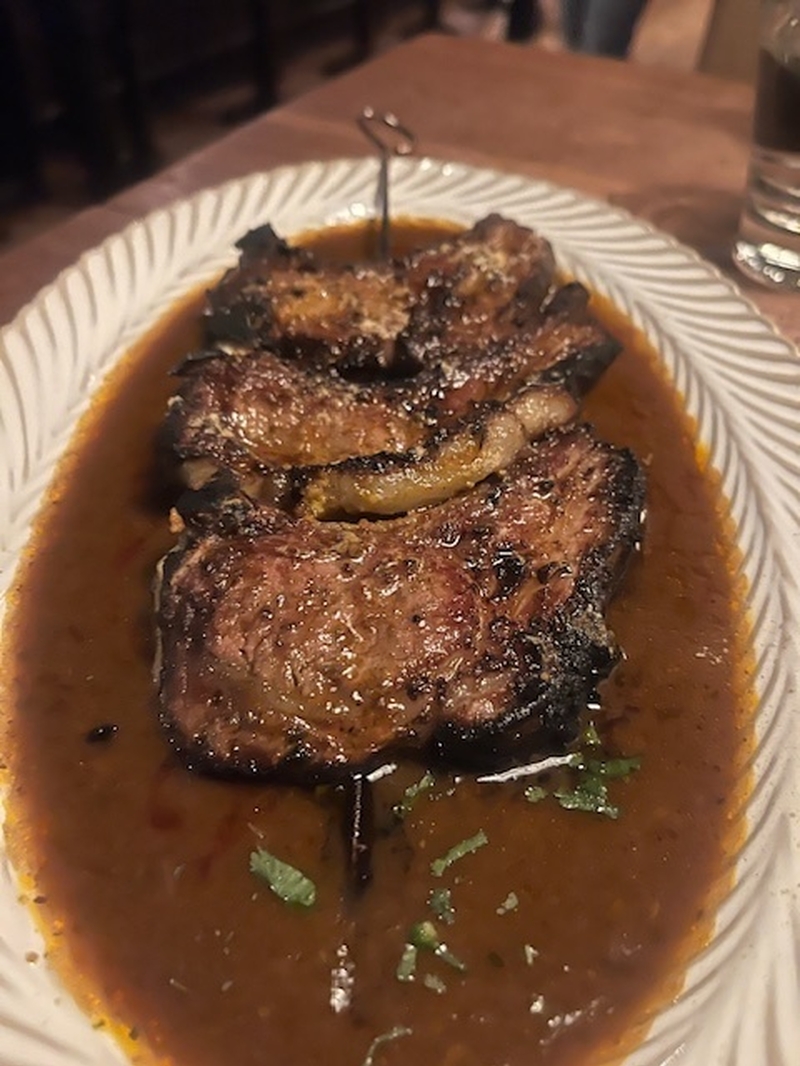
Blackened Lamb Chops at Grilled by Ajay Kumar
Great British Menu viewers will recognise chef Kumar from the 2024 show, where his take on rogan josh swept him to the finals. In his six years as chef patron of Swadish in the Merchant City he has scooped a raft of awards for his take on the cuisine of his native Punjab and now he has opened an ‘authentic barbecue experience’ in a Regent Street basement with a speakeasy feel.
The emphasis is obviously on the grill here (alas the fiery drama of an open kitchen is absent), but the creamy tomato spiciness of a rogan josh is present in a sauce for blackened lamb chops, pungent with garam masala (£18). Portions are large, value is great. Thankfully a world away from GBM fiddliness.
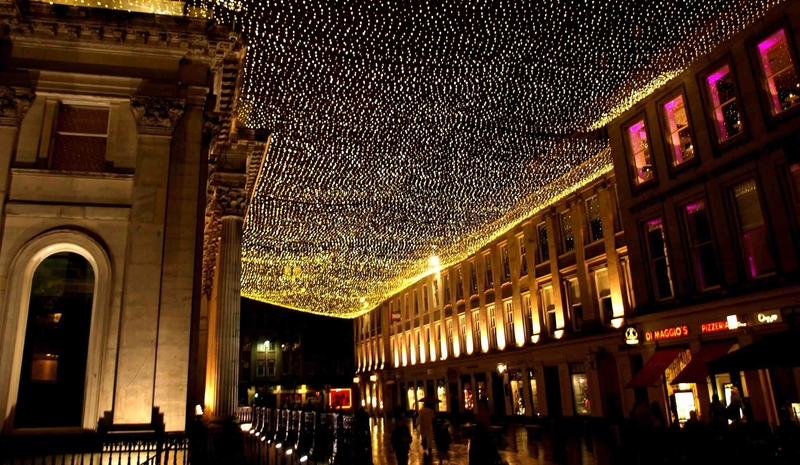
Going native in the re-born Merchant City
By native, I mean Scottish produce. Cooking with true respect for the nation’s great larder. Not the faux Caledonianism of Hamish and Angus piping in the haggis, mind, or shortbread overload. Leave that to Edinburgh. This is Glasgow, after all, a true melting pot of many culinary cultures. Perhaps the centre is awash with too many tapas/pintxos/tacos/pizza joints but even around the party-central purlieus of the restored Merchant City you can find places to savour the delights of cullen skink, cranachan, the amazing Stornoway black pudding and the freshest mussels, crab and scallops.
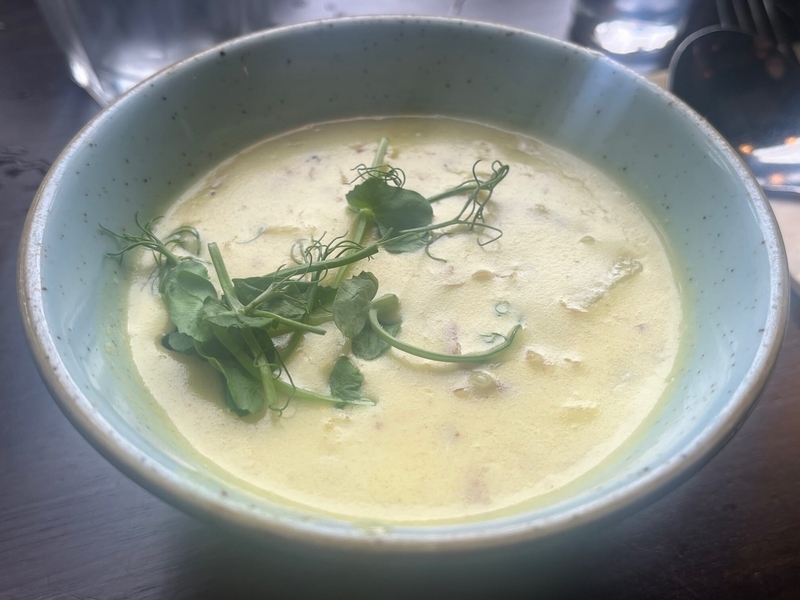

Take Mharsanta, self-styled ‘Scottish Restaurant and Bar’, which also offers ‘immersive Scottish dining experiences’ in situ or at Culzean Castle. I can’t say I took to their de-constructed haggis, tatties and neeps with a whisky cream but their cullen skink was exemplary, a richly creamy bowl packed with smoked haddock (£8.95) and they seem genuinely committed to their provenance.
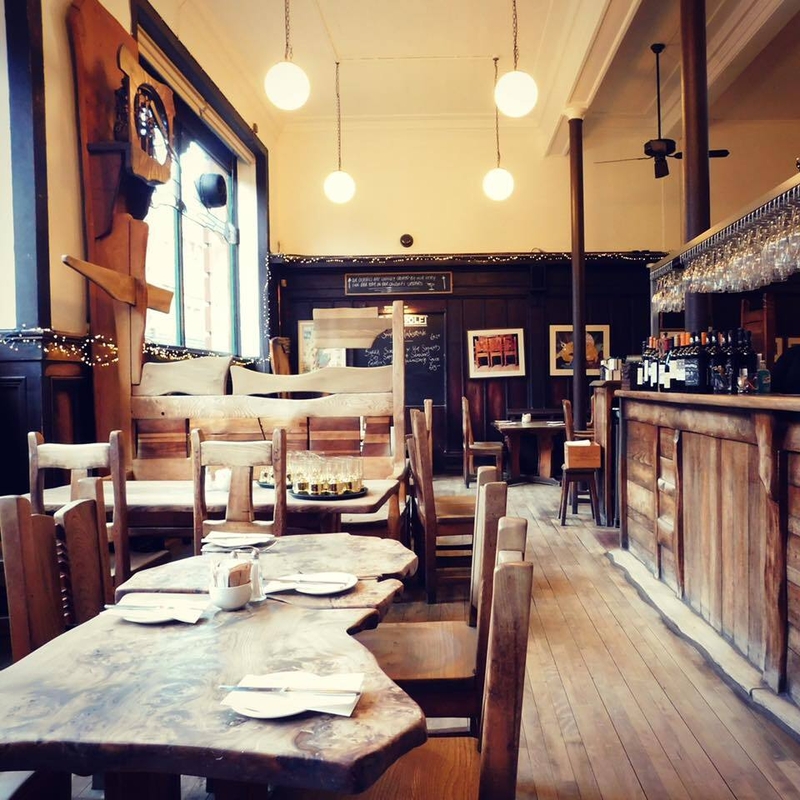
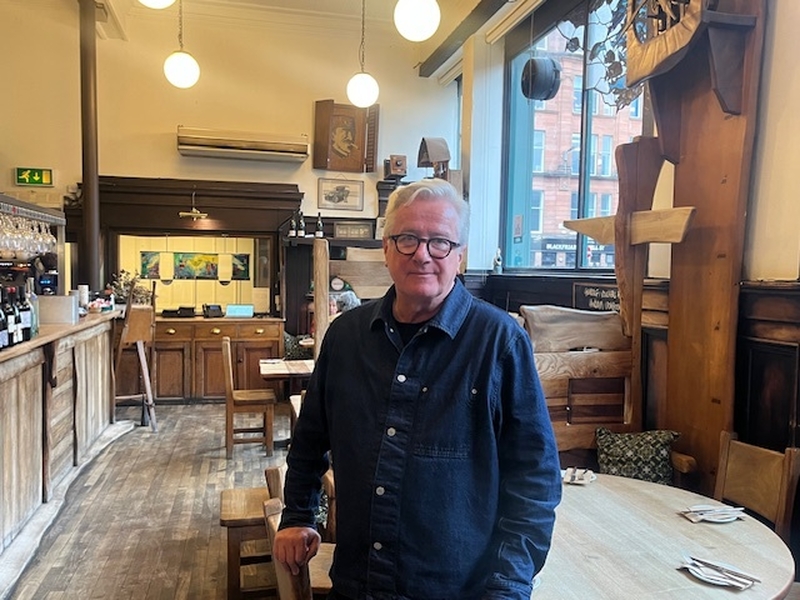
For a more laid-back, comfortable-in-itself celebration of such just head round the corner to the gem that kick-started the once moribund Merchant City scene. There is nowhere quite like Cafe Gandolfi or its owner Seamas MacInnes. To quote their own website: “He arrived at Cafe Gandolfi in 1983 to peel potatoes and chop red cabbage and carrots. By 1995, he’d been a kitchen-porter, charge hand, manager and co-owner until Cafe Gandolfi’s founder, Iain Mackenzie, passed the flame on. His family background in Barra has informed his approach to food.”


A couple of the staff even pre-date Seamas. Now that’s continuity. The same goes for the surroundings. The L-shaped room in the former Cheese Market offers a stylish rusticity featuring Tim Stead wooden furniture and quirky artwork. I particularly love the stained glass ‘A Flock of Fishes’ by Glasgow School of Art alumnus John Clark. The Cafe’s name is in honour of the camera makers Louis Gandolfi and Sons, who were of Glasgow Italian heritage.
The menu too is a case of “if it ain’t broke don’t fix it”. But the eternal freshness of the place is surely down to while the themes may remain the same (check out their vintage cookbook on the counter) the variations are many.
The ubiquitous cullen skink is here but I’d recommend upgrading to a main of West Coast Scottish cod, Arbroath smokies cream, potato terrine and chive oil (£28). And don’t forget a pre-prandial Highland Shoulder cocktail in the airy upstairs bar.

Go for a bean curd bowl Guizhou style with Ms Lea Wu
Southwest China meets Southside Glasgow in a colourful little restaurant which goes the extra mile (thousands actually) to source the authentic ingredients for a regional cuisine that is beyond under our radar. The Real Wan is brought to you by much-travelled Lea Wu – with help from her family network back in their home city of Guiyang (population 3.7m), capital of mountainous Guizhou province.
Lea spreads out on our table ingredients that have made it over at no little expense.

Take litsea shrub, from which essential oils are extracted, with a lemony aroma similar to verbena. Or the fiery chillies for which the province is renowned across China, here ones that have been sun-dried and soaked in salty water. In Glasgow the signature geda noddles are made in-house every day, to be served with an intense garlicky sauce. Lea is an apostle for a cuisine that has much in common with neighbouring, better known Sichuan, adding a certain sourness alongside mouth-numbing pepper. Scary? Not at all. We loved the balanced restraint of a bean curd bowl her team prepared for us.
Variety is the spice of vibrant Southside
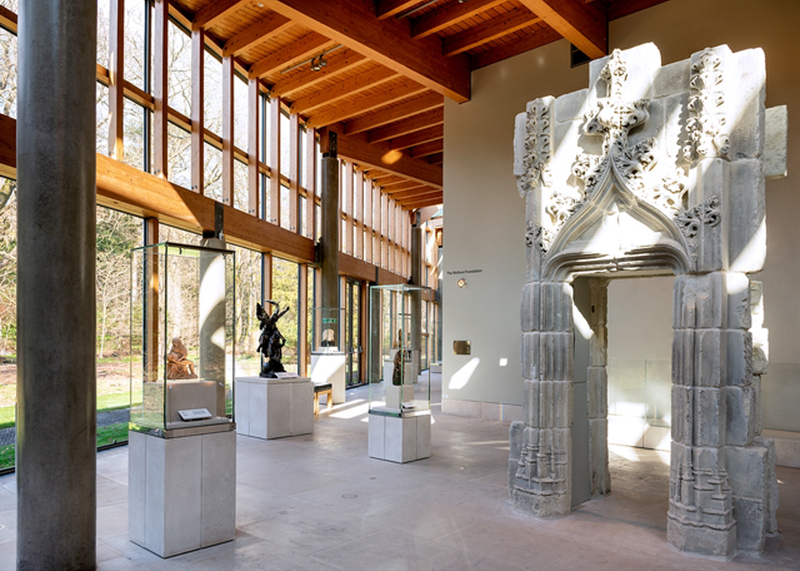
Koelschip and the Real Wan were just introductions to a sprawling area that encompasses everything from tenement grids to elegant crescents around Queen’s Park. That’s one of a surprising number of open spaces, culminating in Pollok Country Park, home to the remarkable, free-to-visit Burrell Collection museum, https://burrellcollection.com/ where you “can explore 6,000 years of art and history.”
Meanwhile everywhere you look across Southside there’s evidence of creative culinary migration. And integration. Masterchef quarter-finalist Julie Lin’s first restaurant, Julie’s Kopitiam, was down in Shawlands, showcasing Malaysian cooking with more than a touch of Glasgow in it.
This rebuttal of authenticity is reflected in her feisty new book, Sama Sama: Comfort Food from my Malaysian Kitchen, as she now concentrates on writing and broadcasting. Newer arrivals, less rooted in the city, have to carve their own paths. Here are a few…

Odd Govanshill bedfellows opposite each other on Victoria Road are Jeju Baked Goods at 393 and the Transylvania Shop and Cafe at 462. The first has a bright orange frontage, the second, for the moment, an over-the-top seasonal Halloween makeover. Year-round, though, since opening in 2020 the Romanian owners have indulged in playful self-parody over their Transylvanian roots. Think blood orange bon bons and bottles of Dracula’s Desire on the shelved alongside 40 of their native cheese, plum brandy and Sibu salamis.

Jeju, in contrast, pays scant homage to Pakistan where husband and wife duo Kamal and Ameena Ijiji were born. Family reasons brought them to Glasgow where Ameena was able to put into practice the very British baking skills she had learnt at the School of Artisan Food in Nottinghamshire. It all seems to be paying off. Last year Jeju was a finalist in Isigny Sainte-Mère’s The Best Croissant UK Awards.

Deanston Bakery has a very different story. Ukrainian owner Yuriy Kachak spent 15 years in London before settling in the Southside for a better quality of life and starting up by baking at home. Over its six years in Shawlands the bakery has become hugely popular. Strathbungo Andy swears by their bagels and caraway-seeded sourdough.
Not content with honouring his nation’s baking heritage, Yuriy and his team have raised over £102,500.00 for the Disaster Emergency Committee Ukraine Humanitarian Appeal.

Kofi Kade translates as ‘coffee shop’ in Sinhalese, but the Sri Lankan inspired sandwiches are the selling point of this tiny cafe/takeaway run by Rukshan Weeraratne on Cathcart Road. During lockdown he spent his last £100 creating authentic sauces in his London kitchen. Bottles of these accompanied him to a new life in Glasgow, their success funding Kofi Kade. Highly recommended from the sarnie board the £9.50 Negombo, fusing prawn and tatties. From the ‘pick your sauce’ list definitely the pineapple and peach with its tropical punch.

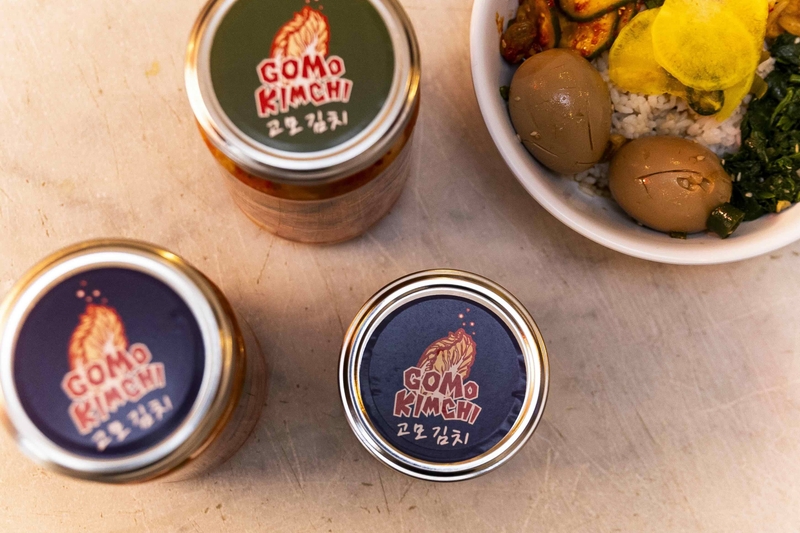
Global is the word. Sri Lankan Rukshan’s favourite Govanhill food spot has been the brainchild of a Korean poet raised in Seattle. Another lockdown home kitchen project. Gomo Kimchi’saim is to recreate the perfect kimchi made by Eddie Hin’s auntie in the American Mid-West. Eddie’s own is close to perfect in my eyes. He currently produces just 30kg to 40kg a week. Still that’s a lot of cabbages to ferment. Check out Glasgow Asian stores to find jars. Eddie has now shut his cafe hub to move away from Southside to a custom-made production plant. A city’s food culture never stands still.

Two portals into Glasgow’s diverse gastronomical scene
Glasgow Food and Drink Tours offers group rambles around various neighbourhoods. Our Merchant City tour guide Rae was top-notch, her own hospitality experiences combining with extensive historical knowledge.
Taste The Placeis a terrific self-guided project showcasing independent food and drink operators across Glasgow under three banners: ‘Taste Through Time’, ‘Taste for Good’ and ‘Taste The World’. Its website was an invaluable companion for our Southside expedition.
Fact file
Neil Sowerby stayed at The Address Hotel, 39-45, Renfield Street, G2 1JS. This four star boutique lodging was listed in the ‘Sunday Times 2024 Best Place to Stay’ and is just a five minute walk from Glasgow Central Station.
He travelled to Glasgow from Manchester with Avanti West Coast.
For full tourism information about the city visit Glasgow Life.