










Jonathan Schofield discovers a rich and full-flavoured world away from the sun loungers
This is a long article as I wanted it go deeper than a standard travel article given Cyprus's complex history and the many experiences on the trip. It's been split into sections (chapters) so readers can read part of it and then return if they wish.
Chapter 1: Zivania, cats and wrong rooms
“I woke one night shouting ‘Zivania! Zivania! Wherefore art thou Zivania?” Or maybe I dreamt I did.
Zivania in Cyprus is everywhere and all day: from breakfast to bed time. It’s a pomace brandy, made of bits of grapes, skins, pulp, seeds, and stems of the fruit. The maximum strength is 60% alcohol but it’s more likely to be around 45%. Every stop we made there was an offering of zivania by friendly hosts. It was often hard to concentrate by 4pm.
Zivania is a flexible commodity too so you can also rub it on wounds, use it as a massage balm or as a cold/flu remedy, possibly by getting so smashed you forget you’re ill.
Alcohol plays an interesting role in Cypriot life. In the Kafkalia delicatessen at Agros there was an apple alcohol ‘lice exterminator’.
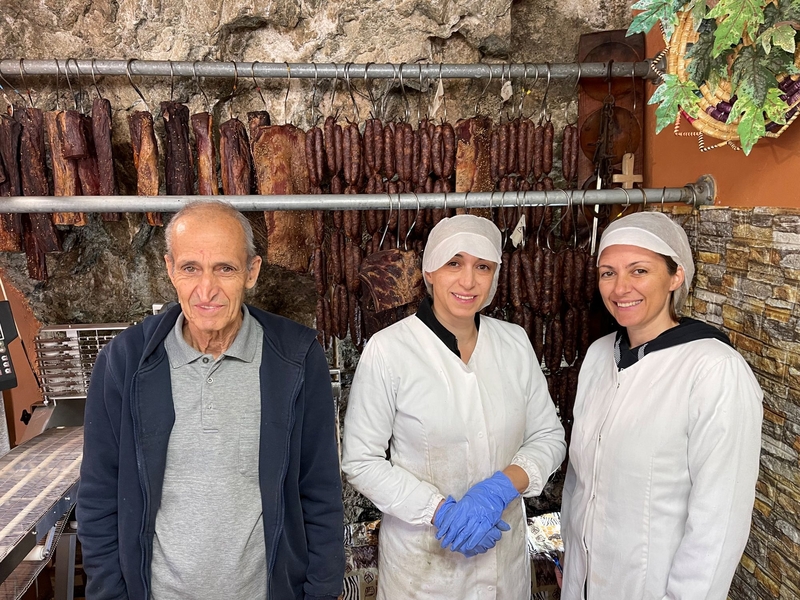
Fortunately in this family-run deli going back to 1978 the main attraction was smoked meats. Dad and daughters were there to welcome us and let us sample some of their fabulous pork products. The smoked goat meat was good too.
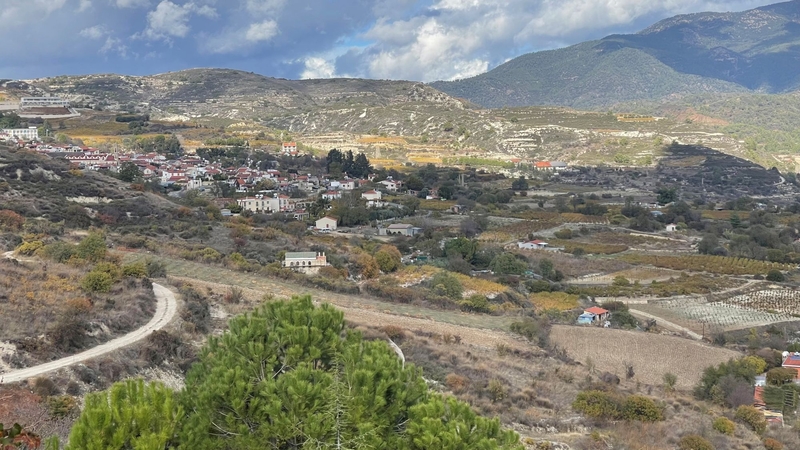
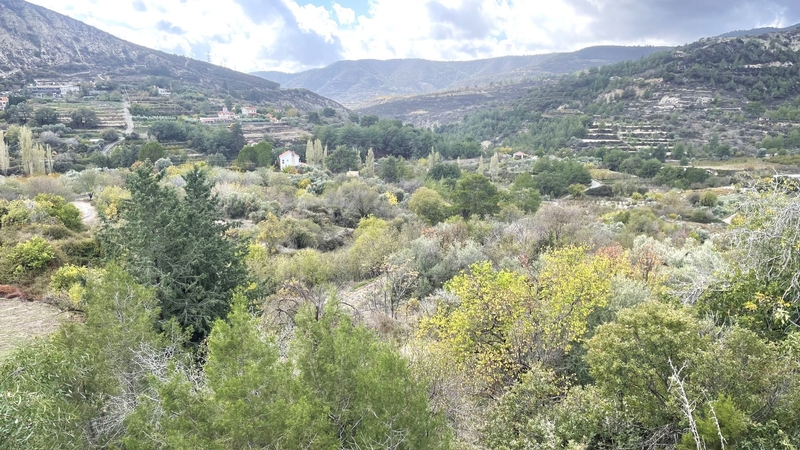
We were travelling around the Troodos mountains on a press excursion sampling food and drink and enjoying the scenery, the architecture and the season. It was November and it was marvellous, a perfect time to go to the high ground of Cyprus. Any season will probably be fine up here but late in the year is a fine time to visit.
The only previous occasion I had been to Cyprus was in August on the east of the island for a wedding at a place called Protaras. It had been like climbing into an oven and asking someone to turn the heat up.
Protaras is a party town and all about the bars and the beaches and with the temperature tickling 40 degrees confirmed yet again I am no beach holiday person. Troodos is the opposite, fresh air, grand views, pretty villages, amazing churches, great food, good walking areas and on our trip, subtle autumn shades in the trees.
Of course we were being watched all the time. Pairs of eyes followed us around at every stop. Cats’ eyes.
Cats are ubiquitous in Cyprus. They are there because of snakes apparently. The island was suffering a reptile infestation during a drought so St Helen, mother of Emperor Constantine who made Christianity the official religion of the Roman Empire, is said to have sent a thousand snake-assassinating cats to sort the problem. I don't know about the snakes but now there’s a cute infestation of cats instead.
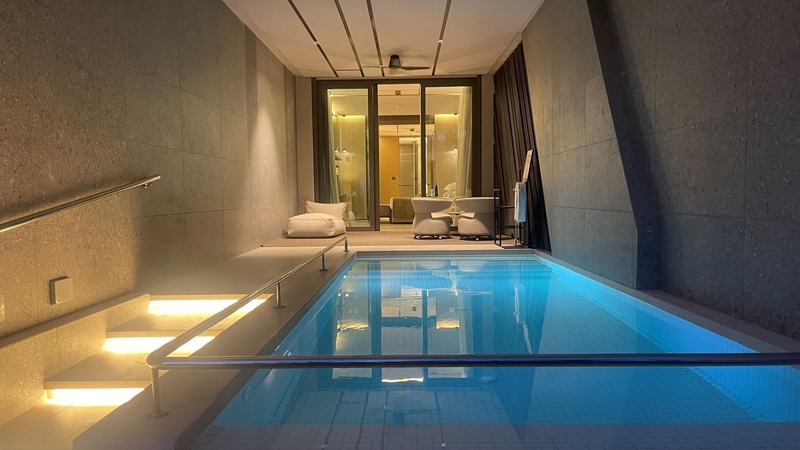
On the first night of the trip as I wandered out of the splendid apartment room with its own swimming pool at the Amathus Residences in Limassol the lawns and sun loungers down to the beach were packed.
With cats.

The cats seemed friendly enough so I stroked one and watched the calm Mediterranean lapping the shore. I returned to my room with its direct access to the gardens and beach and wondered why there was an open bottle of wine with two half-full glasses and why the bed was unmade. I’d walked into some other guest’s room; one which looked like it had seen some recent action. I fled.
The dinner in the restaurant that night was a fine dining affair. The beef tartare and the mille-feuille were particularly good. Most of the food over the next few days would be hearty hill town fare.
The hotel manager, Nick, hosted us and set the precedent for the trip with his geniality. This style of charming hospitality would be the hallmark of the trip.
Mostly.
The mayor of one village (which for discretion shall remain nameless) was something else. He was gloriously grumpy, probably in his sixties, with a sardonic grin. He had been called in last minute on a Sunday to show-off his village and he wasn't happy: I don't blame him, a bunch of writers were disturbing his weekend.
He galloped us around streets where there was conceptual art placed in old buildings such as oil-presses and laundries.
“Don’t ask me what it means,” he shrugged, “it’s terrible, a waste of money.” We sat down for some refreshments. The mayor disappeared and came back with various dry cakes and some wine which he’d purloined from the funeral party round the corner. He then let rip about how he’d managed to get the regional authority to install a public toilet in the village but “of course there’s no budget to clean the toilet so I had to do it this morning. Me. I’m supposed to be the mayor.”
I’ve never seen a happier man as we clambered back into our minibus and left. Our party was in amused hysterics. Although that might have been the zivania over lunch.

Chapter 2: Commandaria and I meet a gourd
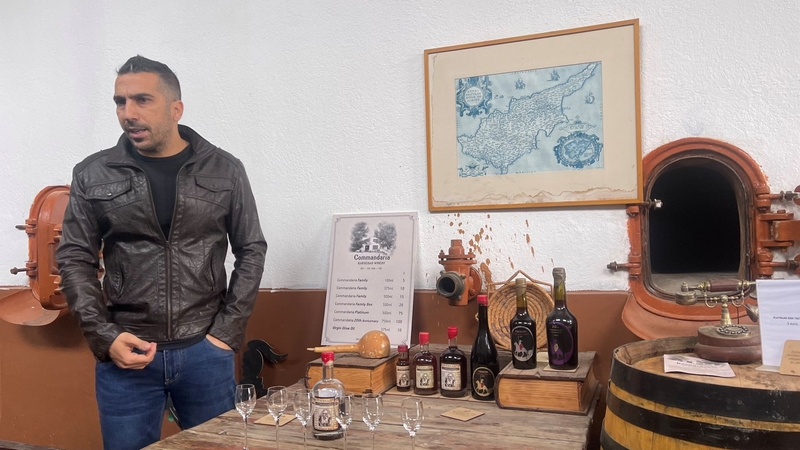
Up in the Troodos mountains Filippos Karseras was more typical. He explained Commandaria wine to us sporting a leather jacket like one of the T-Birds in Grease and talking with an easy smile and great charm. He explained how Commandaria, made from Cypriot wine varietals Xynisteri and Mavro, claims to be the oldest named wine in the world going back to the Knights Templar.
Before the Kinghts Templar it was served at the wedding in 1191 in Cyprus of England’s absentee king, Richard I, the so-called Lionheart, to Berengaria of Navarre. Dicky I, whose passion was crusading, is claimed to have called the Commandaria "the wine of kings and the king of wines".
Commandaria is a protected brand and can only be produced in fourteen villages in the Troodos. It’s very sweet and best for desserts.
We claimed higher into the mountains and our guide Ulla, from Finland but married to a Cypriot for many years, told stories of geology and history.
Ulla had superb knowledge of Cyprus. There are several styles of guiding and Ulla’s was of the very gentlest sort. Her voice had the singsong lilt of her home country but with an incredibly soft register. One day on the trip she said: “I had a guest on a tour from Holland and he said he’d like to take me home. He said I could talk to him when he went to bed and it would help him fall asleep.” Ulla appeared to think this was a compliment. Er…maybe.
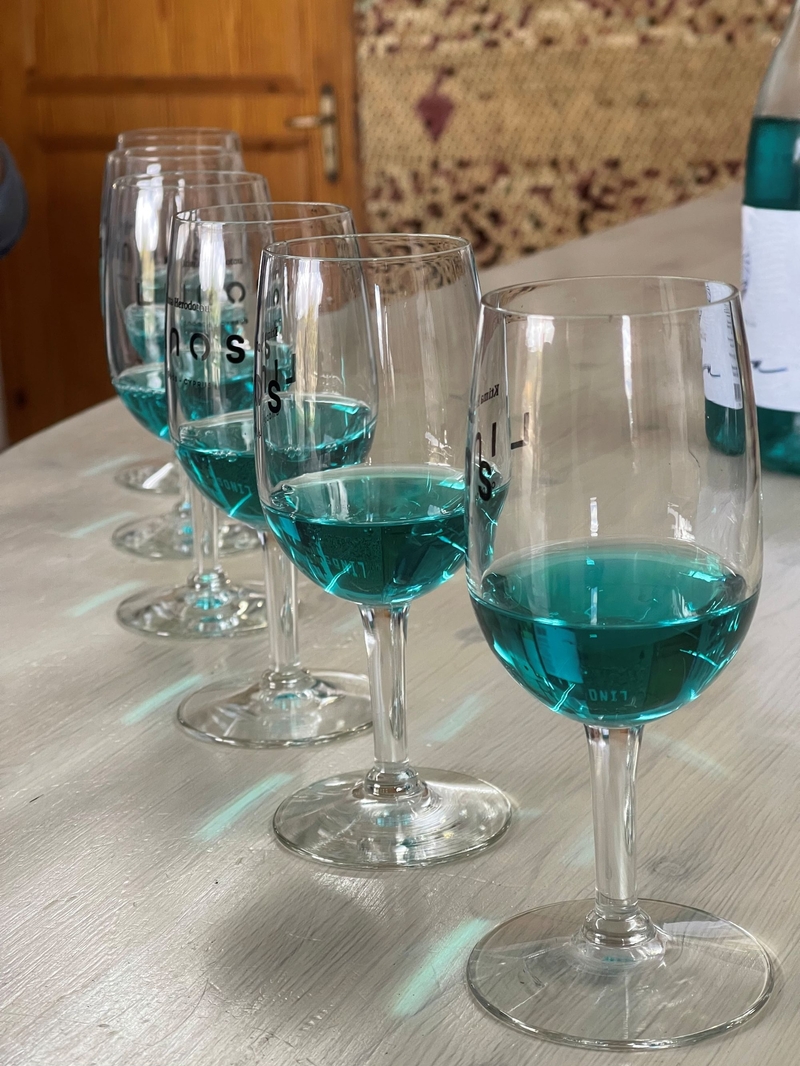
Above the village of Omodos we stopped at the Linos Winery and got the blues. Specifically we got blue wine. Yep blue. This is made from 99% Xynisteri grapes but whatever alchemy is used in its production they can keep it. I found the blue wine as bland as a Michael Mcintyre comedy routine. The winery also does red wines. Much better.
Still, the visit revealed living gourds hanging from trees and it was a rewarding experience. They were growing outside the winery and looked fabulously alien and otherworldly but also cartoonishly phallic. It was hard not to laugh with delight at them. Cypriots traditionally use them as storage for water, wine and even as musical instruments.
“We also store zivania in them,” said one host later in the trip. “Of course you do,” I said, gently swaying to the music of the spheres after the eighteenth shot of the day.

Omodos is a very pretty village with a lovely church and interesting ginnels. We dined at Katoi restaurant. The table groaned under the sheer weight of food. Cypriot hospitality is never shy and generosity is the name of the game.
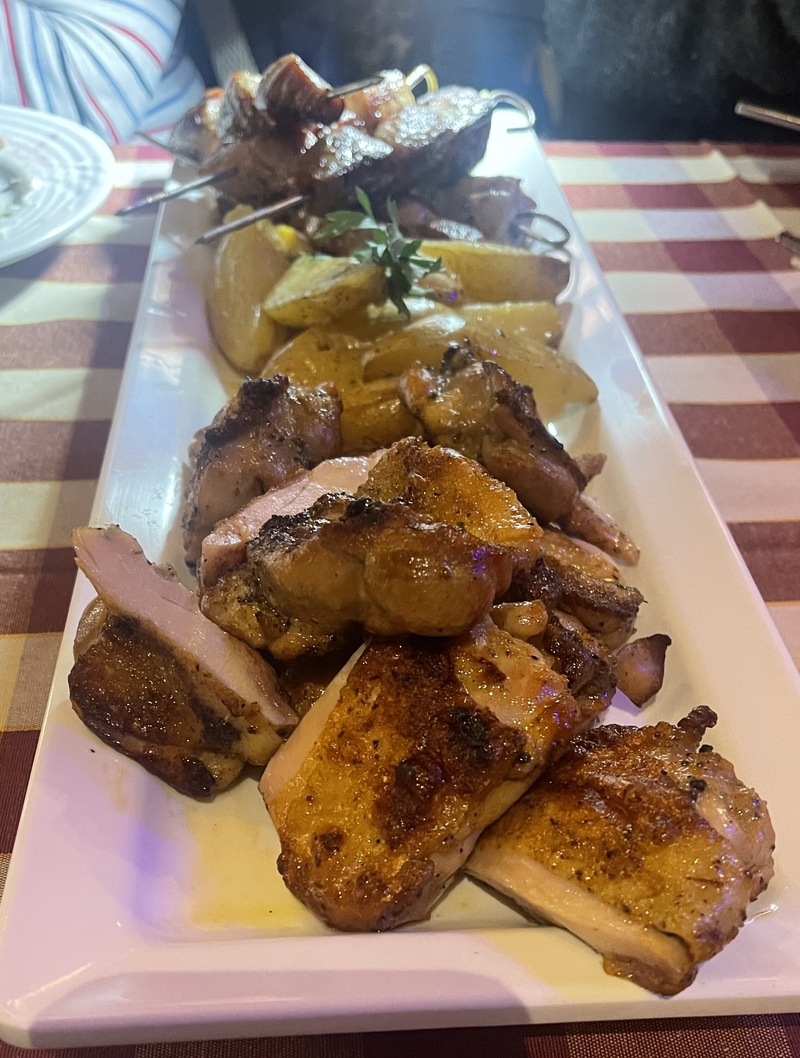
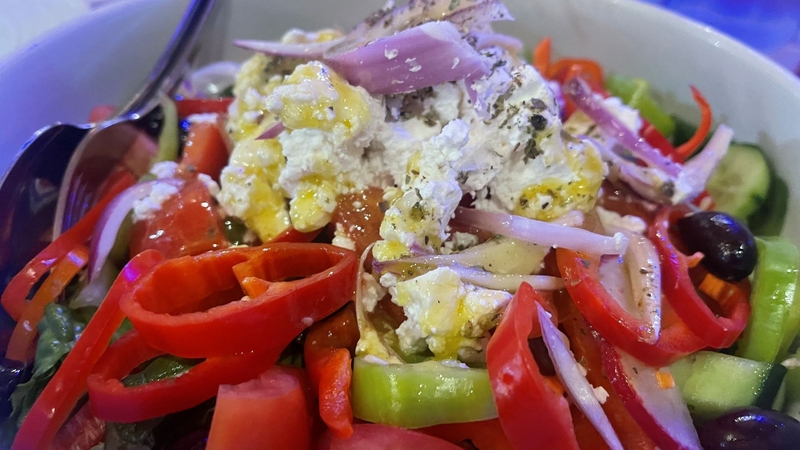
We had a cold platter with cold smoked hiromeri (smoke pork leg), lountza (marinated in red wine and then smoked), kefalotyri cheese, halloumi cheese and vegetable crudities. There was a grilled platter too featuring pork tenderloin lountza again, loukaniko (a delicious pork sausage flavoured orange peel, fennel seed, and various other dried herbs and seeds) and beautiful halloumi. There were dips and, of course, a fresh salad. Cypriot food when done well has a surfeit of vigour and freshness.
Parts of the Troodos have a distinctly Alpine feel, particularly the Platres village. There are mountain trails and skiing in winters. Mount Olympus (1,952m, 6,404ft) is Cyprus’s highest mountain and not to be confused with the one of the same name in Greece where Zeus lives.
The Petit Palais Boutique Hotel in Platres used to host King Farouk of Egypt in the 1930s who despite being a Muslim monarch was partial to a cocktail or two. The typically Cypriot brandy sour was allegedly invented here for him. It cunningly resembles an iced tea and so disguised its alcoholic content from spies. A brandy sour includes brandy, some bitters plus lemon and sugar.
Later on the trip in Larnaca we’d have a brandy sour workshop from Panayiotis Savva the owner of the hipster Sunmoon Hospitality, a bar, graphic design, catering and events business. We made gourd use of gourds there as we prepared the drinks.
Chapter 3: Roses, sweets, high wines and icons galore
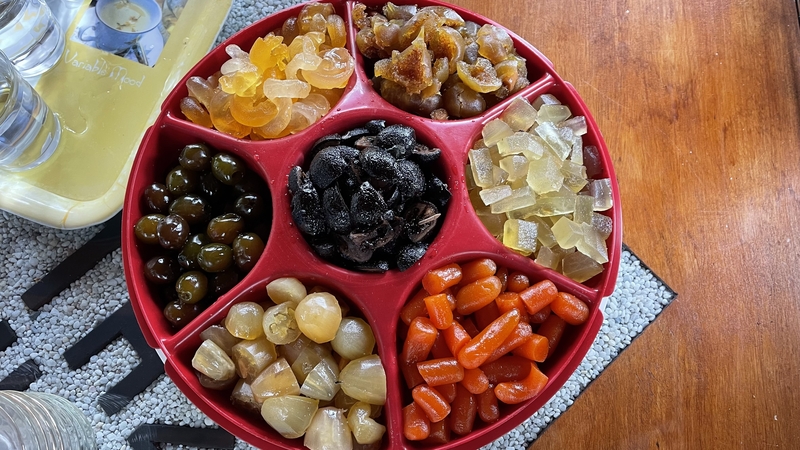
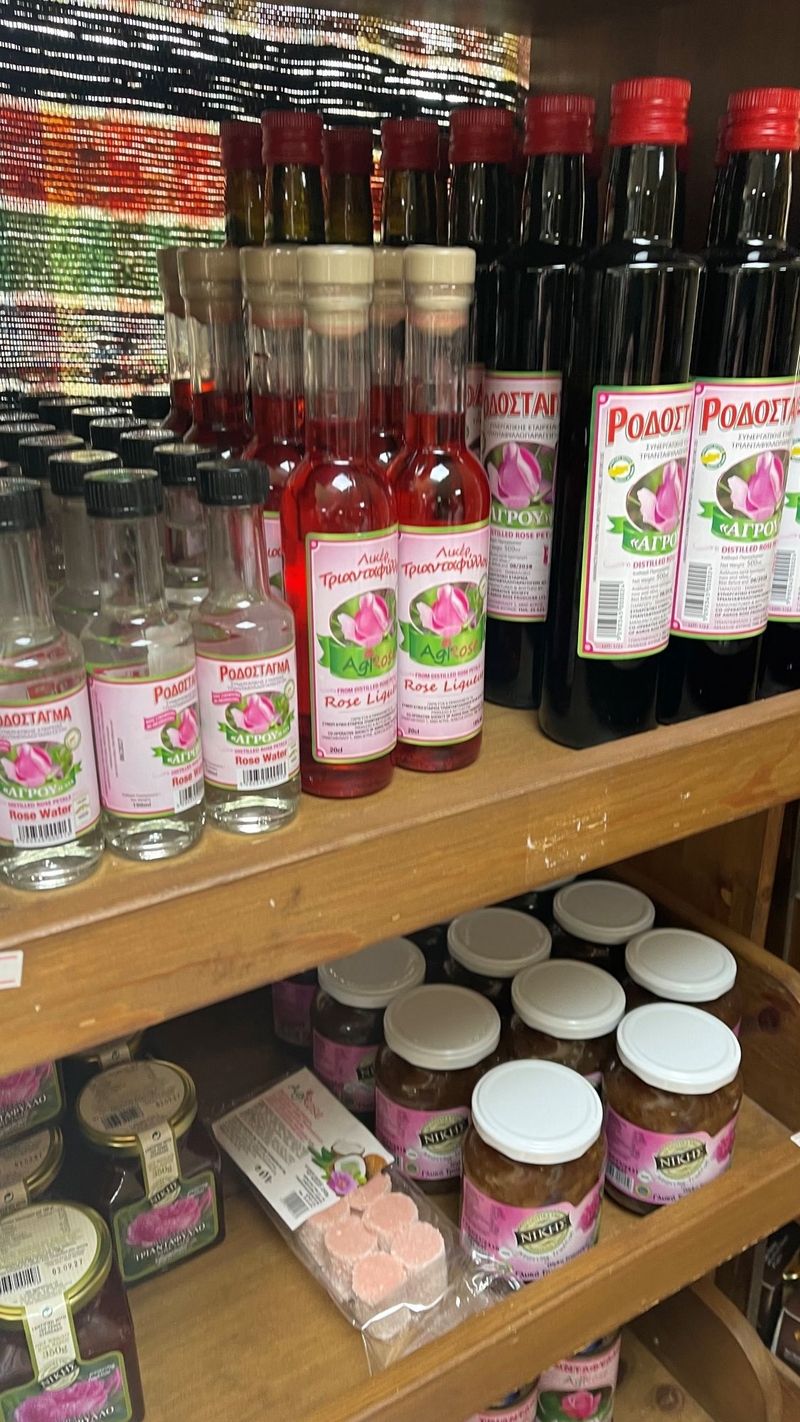
Agros is a proper mountain village, cascading down a hillside. Here we enjoyed spoon sweets, in other words fruit and vegetables preserved in syrup, in the shop and factory of Niki Agathocleous.
That place smelled just as sweet as the Rose Factory where the Tsolakis family aromatically do everything it is possible to do with roses. Everything. There’s rose liqueur, rose tea, rose chocolate, rose chocolate, rose shampoo, rose night cream, rose perfume and…er…rose toothpaste and rose car freshener.
Unsurprisingly there’s a rose festival every March when the village slopes are alive with colour. The village produces twenty tons of roses each year. When you consider how high Agros is at 1,100m (3,600ft) then in a British context this is remarkable. A rose festival on the top of Snowdon or Scafell anyone?
Or what about growing wine on the top of Ben Nevis?
The very smart and well-designed Tsiakkas Winery at Pelendri has vines growing from 1,000m to over 1,400m (3,280ft to 4,593 ft) above sea level. Cyprus gets boiling hot in summer so production has to be at high altitude.
We were talked through the Tsiakkas range by a son of the founders, Ektoras Tsiakkas. My favourites were the full-bodied reds produced from the Yiannoudi grape, a native variety although the winery uses non-native varieties too.

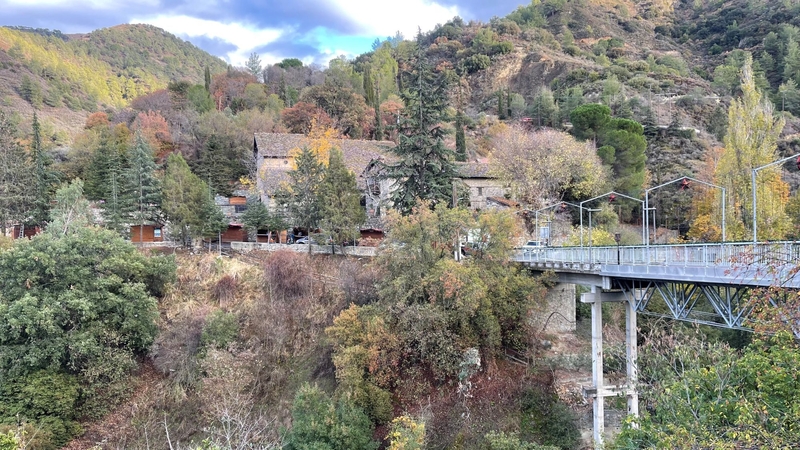
The night was spent in the achingly lovely Kalopanayiotis village that was dressed for Christmas. Troodos villages do Christmas well.
A treat was a visit to the monastery of St John Lampadistis, which also contains the latter’s relics. This is a complex of three churches in one building with the earliest from the 11th century and the latest from 1731.
The outside looks strangely agricultural with its huge barn-like roof which helps the snow slide off in winter. The hauntingly moody interior of the Greek Orthodox church is alive with the bright colours of frescoes. Icons stare at you from all sides.
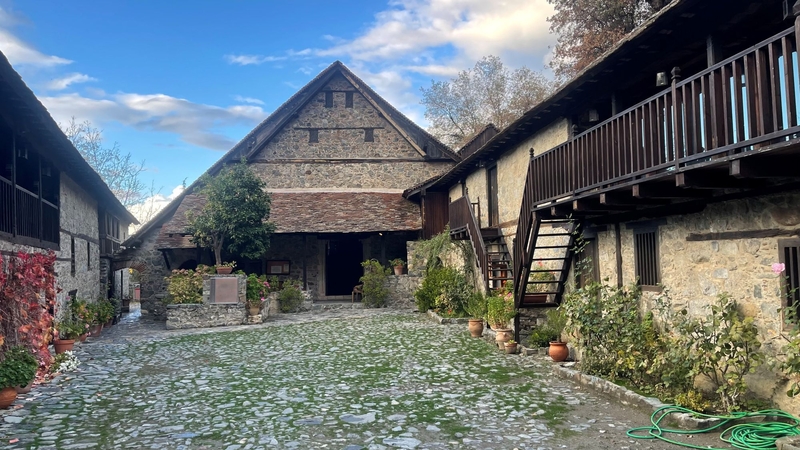

Casale Panayotis is almost a village within a village with rooms in different buildings across a hillside. It has a spa of course and all the usual luxury guest accoutrements. In my room up the hill there was a fireplace with the wood stacked up. It was chilly so I lit the fire, leaned back in a chair with a glass of wine and read until dinnertime.
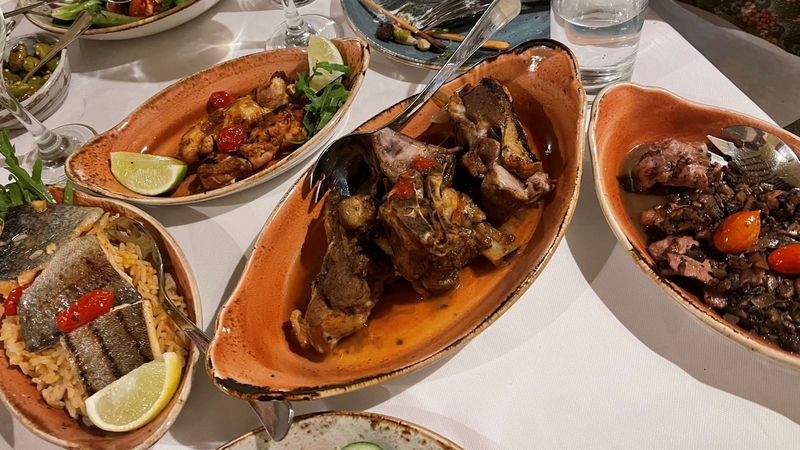
The dinner was as piled high as in Omodos with all the trad Cypriot goodies but the baked local river trout were fabulous, as were the lamb cutlets with lemon and rosemary. This was skilful cooking with again hugely generous proportions.
Later, my chief late-night drinking buddy, Becky Pitcairn, and I shared a bottle of wine on her terrace as the rain cleared and the stars came out. The village lights twinkled. It was dreamlike. By the way Becky is the expert in English wines and her website the English wine diaries is well worth a visit.
Chapter 4: Bees and the dead risen
Our minibus driver was a curiously impassive chap of many years, who scarcely spoke a word and looked eternally put out. We’d christened him Friendly Freddie and while his occupation was as a driver he lived for his cigarettes. A five minute stop would have him out of the driving seat and a fag lit in one smooth motion.
On the next stretch of the journey Freddie had a smoker’s coughing fit. We were going about 50mph and he was bent over double and it went on and on.
And on and on.
Ulla, the guide, drowned out by the racket, started to look anxious and offered him water which he refused but carried on coughing and swerving across the road. He suddenly stopped coughing and we sighed with relief, then, as if in encore, he started again. This time he took the water and his coughing ceased. When we next stopped he sparked up even faster than usual.
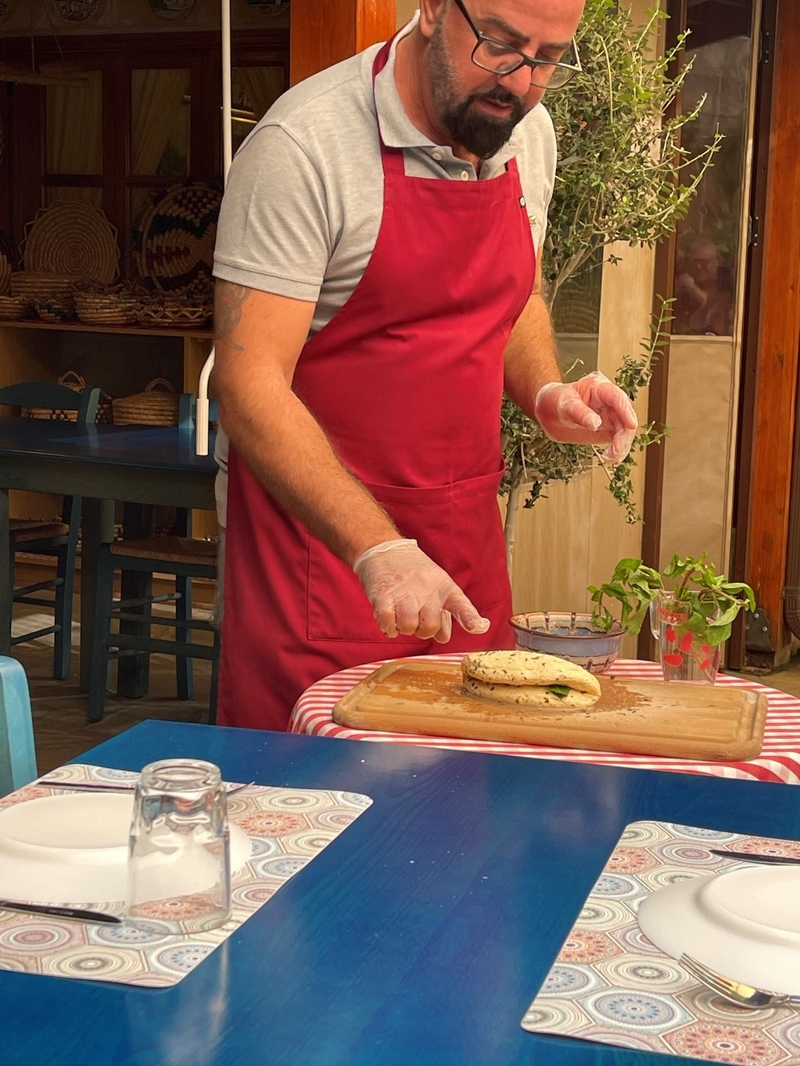
At the Petros Nicolaou’s Basketry Workshop and Museum Petros himself gave us a halloumi making workshop. Or rather we watched him as he made some outstanding halloumi. He then proved himself a basket case, demonstrating reed basket weaving. He claimed he was one of the last remaining traditional basket weavers in Cyprus.
He certainly had made lots of baskets; big baskets, little baskets, baskets shaped like hats and baskets shaped like plates, you name it. It takes him three hours to make small baskets which apparently he does in his spare time at home. His museum resembles an old Cypriot house, I think he said. The whole venue is intriguing, interesting and, in a pleasant way, decidedly eccentric
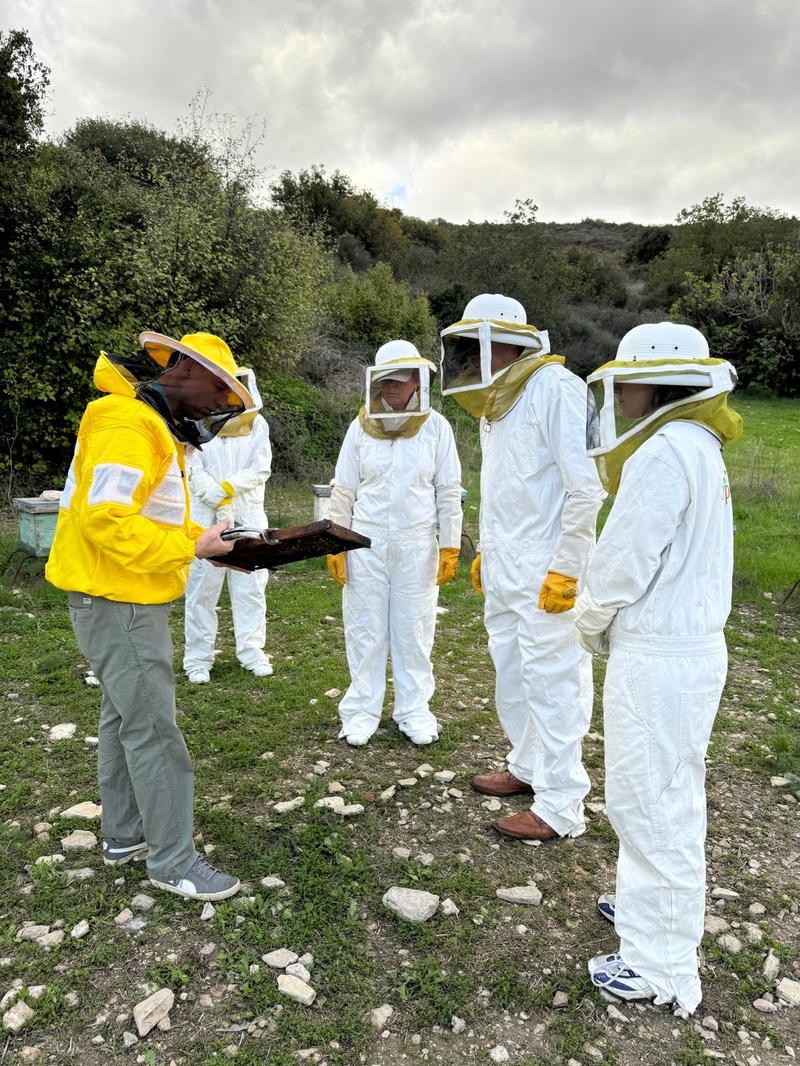
Perhaps the best fun activity of the trip was the beekeeping at Ecophysis. First you get to put on fancy dress (aka a beekeeper's kit), then you get to see the hives while the expert, Costas Stylianou, pulls out the frames with his bare hands. Apparently the bees know him and don’t sting him. Bee ESP, who'd have thought? Then we ate the honey and drank honey-based drinks, before visiting the production area with its tutorial area. All in all this place is great for family visits, the kids would love the dressing up.
We finished back on the coast at Larnaca where a Christmas tree on the beach looked strangely out of place in the bright sunshine. Larnaca is a fascinating town with a big history.
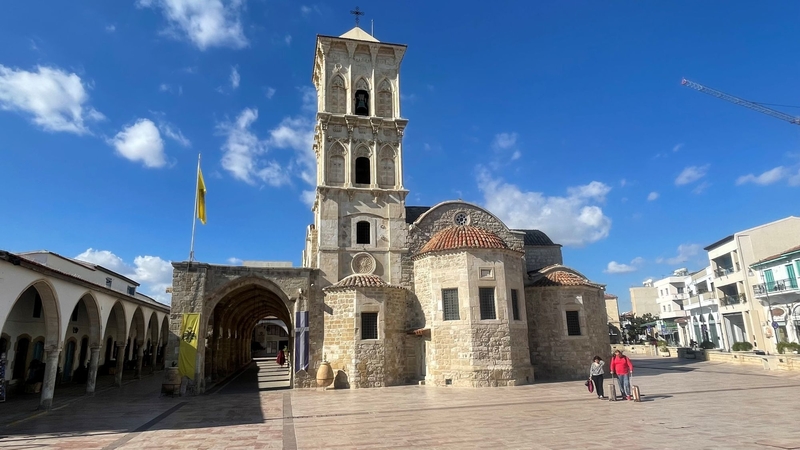
In the church of Saint Lazarus we saw the remains of the saint himself but he didn’t get up to greet us. In a beautiful silver casket there are allegedly the bones of that Lazarus who according to the New Testament was raised from the dead by Jesus.
It was literally a death changing moment, but post-death Lazarus didn't have it easy as others wanted him dead again in an effort to disparage Christ's miracles. Threatened with murder he crossed the sea from Palestine to Cyprus and became the bishop of Larnaca. By tradition he never smiled, not even at those hilarious gourds, because he had seen the horror of unredeemed souls during his time while dead.
It couldn’t have been fun for the people of Larnaca either with him around because Lazarus had started to putrefy after four days and stank of decomposition until he died a second time and permanently. Not even rose soap, shampoo or perfume seemed to help. Although a gourd full of Zivania probably eased the situation for the locals.

Chapter 5: History today and the final course
This trip might have been organised principally around food and drink, but the island has that but is so much more of course.
You can’t escape history in Cyprus. Ask a Cypriot about their history and they know it. It's alive. And they know the British part in it as well, we still have military bases on the island. Nobody in the island is happy about the partition of Cyprus that resulted from the decisions we made as we left.
Britain took over the island in 1878 as the Ottoman Empire declined. From the 1920s it was a Crown Colony until independence in 1960. At that point the island had a majority population of Greek Cypriots at 77% with the rest Turkish Cypriots. A compromise government was imposed but neither side would work with each other when both had vetoes. Violence broke out in 1963-64 followed by an uneasy peace.
When a Greek military dictatorship placed troops on the island in 1974 as part of a plan for unification with mainland Greece there was an inevitable reaction. The Turkish army invaded and a bitter war followed. Ethnic cleansing took place on both sides. After the ceasefire Turkey had taken 36% of the island in the north.
Travelling to Larnaca via Nicosia you pass the fences of the UN garrisoned green line between the Greek and the Turkish side. The Turkish Republic of North Cyprus is not recognised internationally as a separate nation. Boorishly the Turkish side has placed a massive flag on the hillside above the divided capital of Cyprus, Nicosia. Bit childish that.
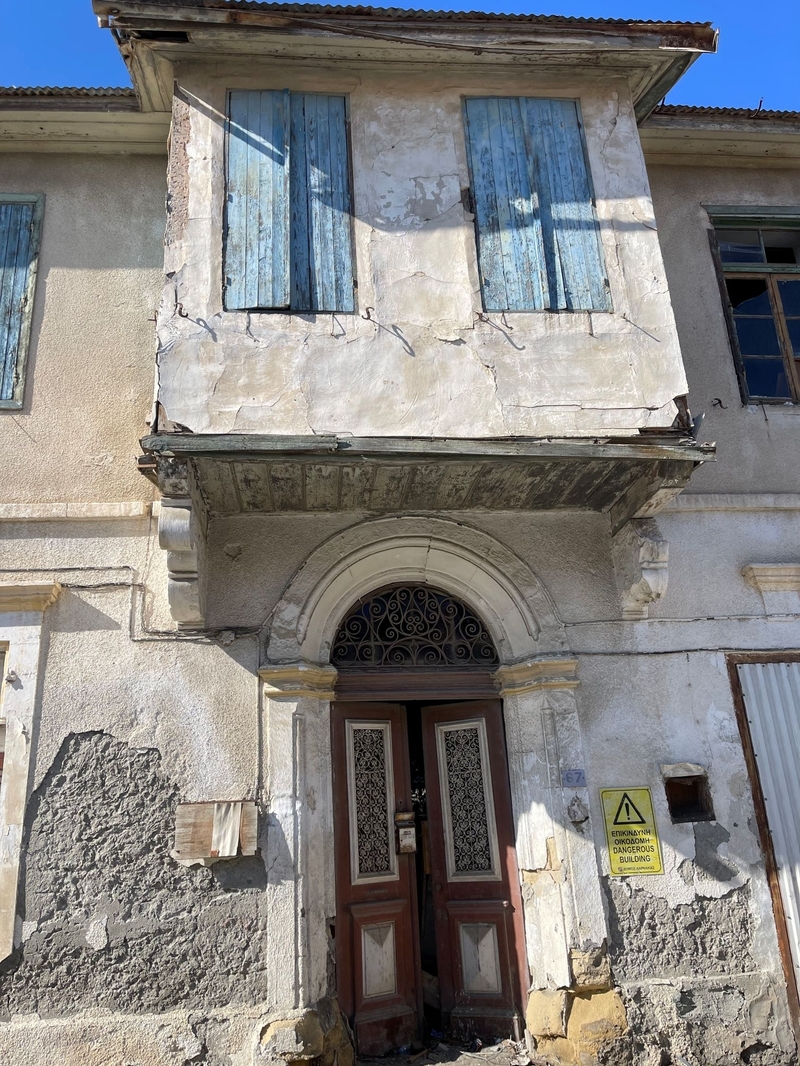
In Larnaca there were lots of grand empty old properties. Tuula, our guide in Larnaca, explained how these were formerly occupied by Turkish families. The Cypriot government can't requistion, restore or sell these because they are still owned by Turkish families.
So what?
Well, if they take the properties they are implicitly acknowledging the legitimacy and independence of the northern part of the island. The Cypriot government says the island is one country (as do most other countries including the UK) and you can't simply steal the property of your citizens. If the government of the Greek-part of the island took the houses they are acknowledging there is a separate state on Cyprus. So the buildings moulder in a no man's land of ancient antagonisms.
The resentment on our trip was palpable. On one occasion I asked if the spoon sweets weren’t also common elsewhere in the eastern Mediterranean. The reply was yes, they are also made in "Asia Minor". I realised the person couldn’t even bring themselves to say the word Turkey.
Yet Cyprus is a blend, a mingling, which is why the partition is a crying shame. For three hundred years it was ruled by the Ottoman Turks and buildings from that time are plain to see in Larnaca. There are of layers of history and tradition everywhere from so many cultures.
It’s the same with the food and drink on the island which brings the West and the Levant together. It is part of what makes Cyprus a fabulous place to visit, especially out-of-season, especially in the glorious Troodos mountains. It feels like the real Cyprus up there away from the resorts.
If you're not a beach holiday person then take to the hills, take in the context and history of the landscape, take in the views and stuff yourself with Cypriot food. Drink it deep too and maybe try - up to you? - to understand how this land is as it wonderfully is.
The trip was arranged through the Cyprus Deputy Ministry of Tourism. A big thanks to Tania Peck who organised the trip. She was a fine travelling companion too along with fellow travelling media-folk Amanda, Emily, Becky and Petra. Links to the places we visited can be found in the article above.